A comprehensive examination of alcohol use in modern perfumery through the lenses of chemistry, Islamic jurisprudence, comparative religious studies, and international regulatory frameworks.
The presence of alcohol in modern perfumes represents one of the most complex intersections of science, religion, culture, and commerce in contemporary consumer products. While alcohol serves as the primary solvent in approximately 90% of commercial fragrances worldwide, its use raises significant questions for consumers who navigate religious dietary laws, ethical considerations, and health concerns.
This debate is particularly pronounced within Muslim communities, where the prohibition of khamr (intoxicants) in Islamic law creates uncertainty about the permissibility of alcohol-containing perfumes. However, the discussion extends far beyond religious boundaries, encompassing scientific questions about skin absorption, regulatory definitions across jurisdictions, and the availability of alcohol-free alternatives such as traditional attars.
This article provides a comprehensive, neutral examination of alcohol in perfumery from multiple academic perspectives. It synthesizes research from organic chemistry, toxicology, Islamic jurisprudence (fiqh), comparative religious studies, and international cosmetic regulation. The goal is not to issue religious rulings or promote specific products, but to present a definitive reference resource that allows readers to understand the complexity of this topic through evidence-based analysis.
Understanding alcohol in perfumes requires examining not only what alcohol is chemically, but also why it became the industry standard, how different religious and legal systems classify it, and what scientific evidence exists regarding its effects when applied topically. This multidisciplinary approach reveals that simple answers are inadequate for a question that spans chemistry labs, religious scholarship, regulatory agencies, and consumer choice.
What Is Alcohol in Scientific Terms?
In chemistry, the term “alcohol” refers to a broad class of organic compounds characterized by the presence of one or more hydroxyl (-OH) functional groups attached to carbon atoms. This chemical family includes thousands of distinct molecules with vastly different properties, applications, and safety profiles.
Ethanol: The Primary Perfume Solvent
When discussing alcohol in perfumes, the specific compound in question is almost always ethanol (ethyl alcohol, C₂H₅OH). Ethanol is a simple two-carbon alcohol that exists as a clear, colorless liquid at room temperature with a characteristic odor. It is the same chemical compound found in alcoholic beverages, though perfume-grade ethanol undergoes different processing and often contains additives that render it undrinkable.
Ethanol’s molecular structure gives it unique properties that make it ideal for perfumery. The hydroxyl group makes it polar, allowing it to dissolve many fragrance compounds that would not dissolve in water. Simultaneously, the hydrocarbon portion of the molecule provides some non-polar character, enabling ethanol to dissolve oils and resins. This dual nature makes ethanol an excellent solvent for the complex mixture of aromatic compounds that constitute a perfume formula.
Other Alcohols in Fragrance Chemistry
Beyond ethanol, perfume formulations may contain other alcohols that serve different functions. These include:
- Benzyl alcohol: A naturally occurring aromatic alcohol found in many flowers, used both as a solvent and as a fragrance ingredient itself
- Phenylethyl alcohol: A rose-scented alcohol derived from rose oil or synthesized, used as a fragrance component
- Isopropyl alcohol (isopropanol): Occasionally used in lower-cost formulations, though less common than ethanol
- Fatty alcohols: Long-chain alcohols like cetyl alcohol and stearyl alcohol, used in cream perfumes and solid fragrances as emollients and thickeners
It is crucial to distinguish between these various alcohols. Fatty alcohols, for example, are solid waxy substances that bear no resemblance to ethanol and are not intoxicating. They are generally considered unproblematic from religious and health perspectives. The primary debate centers specifically on ethanol and, to a lesser extent, isopropanol.
Volatile Solvents and Evaporation
Ethanol is classified as a volatile organic compound (VOC), meaning it readily evaporates at room temperature. This volatility is precisely why it functions so effectively in perfumes. When applied to skin, the alcohol evaporates quickly, carrying fragrance molecules into the air where they can be detected by the olfactory system. The rate of evaporation influences how a perfume develops over time, creating the characteristic “top notes,” “heart notes,” and “base notes” that perfumers carefully orchestrate.
Why Alcohol Is Used in Modern Perfumes
The dominance of alcohol in modern perfumery is not arbitrary but results from a combination of chemical properties, economic factors, and consumer preferences that developed over the past two centuries. Understanding why alcohol became the industry standard requires examining both its functional advantages and the historical context of perfume manufacturing.
Superior Solvent Properties
Ethanol’s primary advantage is its exceptional ability to dissolve a wide range of fragrance materials. A typical perfume formula may contain dozens or even hundreds of individual aromatic compounds, including essential oils, absolutes, resins, and synthetic molecules. These ingredients vary widely in their chemical properties—some are highly polar, others non-polar, some are liquid, others solid at room temperature.
Ethanol can dissolve this diverse array of materials into a single, stable, homogeneous solution. This versatility is unmatched by most other solvents. Water, for example, cannot dissolve many fragrance oils. Pure oils can blend some materials but struggle with others and create products that feel heavy and greasy on skin.
Rapid Evaporation and Diffusion
The volatility of ethanol creates the characteristic perfume experience. When sprayed or dabbed onto skin, the alcohol evaporates quickly, leaving behind the fragrance oils. This rapid evaporation serves several purposes:
- It creates an immediate burst of scent as volatile top notes are released
- It prevents the perfume from feeling wet or sticky on skin
- It allows the fragrance to develop in stages as different components evaporate at different rates
- It facilitates the projection of scent into the surrounding air
This evaporation profile is difficult to replicate with oil-based perfumes, which remain on the skin and release fragrance more slowly through body heat rather than evaporation.
Preservation and Stability
Ethanol acts as a natural preservative, inhibiting the growth of bacteria, fungi, and other microorganisms that could spoil a perfume. At concentrations above 20%, ethanol creates an environment hostile to most microbial life, eliminating the need for additional preservatives in many formulations. This antimicrobial property extends the shelf life of alcohol-based perfumes to several years when stored properly.
Economic and Manufacturing Advantages
From a manufacturing perspective, ethanol offers significant practical benefits. It is relatively inexpensive to produce in large quantities, either through fermentation of agricultural products or synthetic production from petroleum. It is easy to handle, non-corrosive to standard equipment, and can be recycled in manufacturing processes. These factors make alcohol-based perfumes economically viable for mass production.
Consumer Expectations and Sensory Experience
Over the 20th century, consumers in most markets came to expect certain characteristics from perfumes: a light, non-greasy feel; immediate scent impact; the ability to spray the product; and a fresh, clean sensation upon application. Alcohol-based formulations deliver these expectations effectively. The cooling sensation of evaporating alcohol, the fine mist produced by spray atomizers, and the quick-drying nature of the product have become synonymous with “perfume” in the minds of most consumers, creating a self-reinforcing cycle that maintains alcohol’s dominance in the market.
Types of Alcohol Used in Fragrances
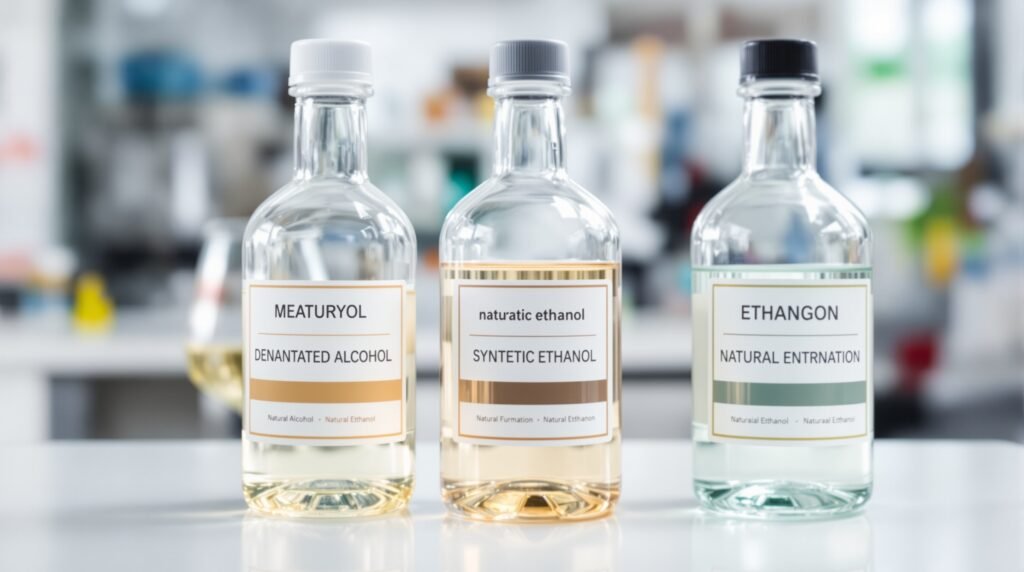
Not all ethanol used in perfumery is identical. The source, processing method, and additives present in the alcohol can vary significantly, with implications for both the final product’s characteristics and its classification under various religious and regulatory frameworks.
Denatured Alcohol (Alcohol Denat.)
The vast majority of commercial perfumes use denatured alcohol, often listed on ingredient labels as “Alcohol Denat.” or “SD Alcohol” (Specially Denatured Alcohol). Denatured alcohol is ethanol that has been rendered undrinkable through the addition of denaturants—substances that make the alcohol taste extremely bitter or otherwise unpalatable.
The primary reason for denaturing is economic and regulatory. In most countries, ethanol intended for consumption is heavily taxed as a beverage alcohol. By adding denaturants, manufacturers can use tax-free alcohol for industrial and cosmetic purposes. Common denaturants include:
- Denatonium benzoate: An extremely bitter compound, considered the most bitter substance known
- Isopropyl alcohol: Another alcohol with an unpleasant taste
- Methyl alcohol (methanol): Toxic if consumed, though used in very small quantities
- Tert-butyl alcohol: A bitter-tasting alcohol
The specific denaturants and their concentrations are regulated by government agencies and vary by country. In the European Union, for example, cosmetic alcohol typically follows formulations specified in EU regulations. In the United States, the Alcohol and Tobacco Tax and Trade Bureau (TTB) approves specific denatured alcohol formulas for cosmetic use.
Synthetic Ethanol
Ethanol can be produced synthetically through chemical processes rather than fermentation. The most common method involves the hydration of ethylene, a petroleum-derived compound. The chemical reaction produces ethanol that is molecularly identical to fermentation-derived ethanol—both have the same chemical formula (C₂H₅OH) and identical properties.
From a purely chemical standpoint, synthetic ethanol is indistinguishable from natural ethanol. However, the distinction matters in certain contexts. Some religious scholars argue that synthetic ethanol, not derived from fermentation of sugars, may be treated differently under Islamic law than fermentation-derived alcohol. Additionally, some consumers prefer “natural” ingredients and may seek perfumes made with fermentation-derived alcohol.
Fermentation-Derived Ethanol
Traditional ethanol production involves the fermentation of sugars by yeast, the same process used to make alcoholic beverages. The sugar source can vary widely:
- Grain alcohol: Derived from wheat, corn, barley, or other grains
- Grape alcohol: Produced from grapes or grape must
- Sugar cane alcohol: Made from sugar cane or molasses
- Beet alcohol: Derived from sugar beets
After fermentation, the ethanol is distilled to high purity (typically 95-96% ethanol by volume) and then denatured for cosmetic use. Some high-end perfume houses specifically use grape alcohol or wheat alcohol and may mention this on their packaging, as these sources are sometimes perceived as higher quality.
Organic and “Natural” Alcohol
With the growth of the natural and organic cosmetics market, some perfume manufacturers now use certified organic alcohol derived from organic agricultural sources. This alcohol is chemically identical to conventional fermentation-derived ethanol but comes from crops grown without synthetic pesticides or fertilizers and processed according to organic certification standards.
Alcohol Types in Perfumery: Functional Comparison
| Alcohol Type | Source | Processing | Common Use | Religious Considerations |
|---|---|---|---|---|
| Denatured Grain Alcohol | Wheat, corn, barley fermentation | Fermentation, distillation, denaturation | Mass-market perfumes | Debated in Islamic jurisprudence |
| Synthetic Ethanol | Petroleum (ethylene hydration) | Chemical synthesis, denaturation | Industrial perfumes, lower-cost products | Some scholars consider more permissible |
| Grape Alcohol | Grape fermentation | Fermentation, distillation, denaturation | Premium perfumes | Debated; some consider problematic |
| Sugar Cane Alcohol | Sugar cane fermentation | Fermentation, distillation, denaturation | Natural/organic perfumes | Debated in Islamic jurisprudence |
| Organic Certified Alcohol | Organic grain or sugar fermentation | Organic fermentation, distillation, denaturation | Natural/organic perfumes | Same debates as conventional fermented alcohol |
| Isopropyl Alcohol | Petroleum or fermentation | Chemical synthesis or fermentation | Budget perfumes, body sprays | Generally considered less problematic |
Understanding these distinctions is important because religious rulings, consumer preferences, and regulatory classifications may treat these different alcohol types differently, even though they are chemically similar or identical in their final form.
Islamic Jurisprudence Perspectives
The question of alcohol in perfumes within Islamic law (Sharia) is complex and has been the subject of extensive scholarly debate spanning centuries. This section presents the major perspectives within Islamic jurisprudence without issuing rulings or fatwas, as this article is an academic resource, not a religious authority.
The Prohibition of Khamr in Islamic Sources
The foundation of the discussion lies in the Quranic prohibition of khamr, typically translated as “intoxicants” or “wine.” Several verses in the Quran address this prohibition, most explicitly in Surah Al-Ma’idah (5:90-91), which describes khamr as “an abomination of Satan’s handiwork” and commands believers to avoid it.
The Prophet Muhammad’s hadith (recorded sayings and actions) further elaborate on this prohibition. One frequently cited hadith states: “Every intoxicant is khamr, and every khamr is haram (forbidden).” Another hadith addresses the question of purity: “Every intoxicant is khamr, and every khamr is impure (najis).”
However, classical Islamic scholars have long debated the precise definition of khamr, whether the prohibition extends to all forms of alcohol or only to intoxicating beverages, and whether alcohol is inherently impure (najis) or only forbidden to consume.
Classical Scholarly Positions
The four major Sunni schools of Islamic jurisprudence (madhahib) have historically held different positions on the nature of alcohol and its permissibility in non-consumable applications:
Hanafi School: The Hanafi school traditionally held that only grape-based and date-based fermented beverages constitute khamr in the strictest sense. Other intoxicating substances are haram (forbidden) to consume but may not be inherently impure (najis). This distinction led some Hanafi scholars to permit the external use of alcohol not derived from grapes or dates, including in perfumes and medicines, as long as it is not consumed.
Maliki School: Maliki scholars generally defined khamr more broadly to include any intoxicating substance. However, they distinguished between the prohibition of consumption and questions of ritual purity. Some Maliki jurists permitted the external use of alcohol-based products if the alcohol had been transformed (istihalah) or denatured, rendering it no longer intoxicating.
Shafi’i School: The Shafi’i school typically classified all intoxicating liquids as khamr and considered them impure (najis). This stricter interpretation would suggest that alcohol-containing perfumes should be avoided. However, some Shafi’i scholars made exceptions for medicinal use or for alcohol that had undergone chemical transformation.
Hanbali School: Hanbali jurisprudence generally aligned with the Shafi’i position, considering intoxicants impure. However, like other schools, Hanbali scholars recognized principles of necessity (darurah) and transformation (istihalah) that could affect rulings in specific cases.
Contemporary Scholarly Debates
Modern Islamic scholars have revisited these classical positions in light of contemporary chemistry and manufacturing processes. Several key arguments have emerged in contemporary discourse:
The Transformation (Istihalah) Argument: Some scholars argue that when alcohol is denatured or mixed with other substances in perfume, it undergoes istihalah—a complete transformation into a new substance with different properties. According to this view, denatured alcohol in perfume is no longer the same as beverage alcohol and therefore may not fall under the same prohibition. This principle has precedent in classical fiqh, where scholars permitted the use of transformed substances (such as vinegar made from wine through natural fermentation).
The Source Distinction: Some contemporary scholars distinguish between alcohol derived from fermentation (which they consider analogous to khamr) and synthetic alcohol produced through chemical processes (which they argue is a different substance entirely). According to this view, synthetic alcohol may be permissible in perfumes even if fermentation-derived alcohol is not.
The External Use Principle: Many scholars emphasize that the Quranic prohibition specifically addresses consumption of intoxicants. They argue that external application of alcohol in perfumes, which does not lead to intoxication and involves no consumption, may fall outside the scope of the prohibition. This view is strengthened by hadiths that describe the Prophet Muhammad using perfumes, though the perfumes of his time were oil-based attars rather than alcohol-based.
The Purity Question: A related debate concerns whether alcohol is inherently impure (najis). If alcohol is considered impure, then its presence on skin or clothing could affect the validity of prayer (salah). Scholars who consider denatured or synthetic alcohol to be pure (tahir) argue that perfumes containing such alcohol do not create ritual impurity issues.
Institutional Positions
Various Islamic scholarly councils and institutions have issued statements on this topic, though consensus remains elusive:
- The Islamic Fiqh Academy (a body of the Organization of Islamic Cooperation) has discussed alcohol in cosmetics and generally distinguished between consumption and external use
- Some halal certification bodies certify perfumes containing synthetic or denatured alcohol as halal, while others do not
- Individual scholars and muftis have issued varying opinions based on their interpretation of classical sources and contemporary circumstances
The Principle of Caution (Ihtiyat)
Given the diversity of scholarly opinion, many Muslims apply the principle of caution (ihtiyat) or precaution (wara’), choosing to avoid alcohol-containing perfumes even if some scholars permit them. This approach reflects the hadith: “Leave that which makes you doubt for that which does not make you doubt.” For such individuals, alcohol-free alternatives provide a clear solution.
Summary of Islamic Jurisprudence Perspectives
| Perspective | Key Argument | Implication for Perfumes | Supporting Schools/Scholars |
|---|---|---|---|
| Strict Prohibition | All alcohol is khamr and najis; must be avoided in all forms | Alcohol-containing perfumes should not be used | Some Shafi’i and Hanbali scholars |
| Source-Based Distinction | Only grape/date alcohol is khamr; other sources may be permissible externally | Grain or synthetic alcohol perfumes may be permissible | Some Hanafi scholars |
| Transformation (Istihalah) | Denatured alcohol is transformed into a new substance | Denatured alcohol perfumes may be permissible | Some Maliki and contemporary scholars |
| Synthetic Alcohol Exception | Synthetic alcohol is not khamr as it’s not from fermentation | Synthetic alcohol perfumes are permissible | Some contemporary scholars |
| External Use Permissibility | Prohibition applies to consumption, not external application | All alcohol perfumes permissible for external use | Some contemporary scholars across schools |
| Precautionary Avoidance | When in doubt, avoid; choose clear alternatives | Prefer alcohol-free perfumes to avoid doubt | Individuals applying ihtiyat principle |
It is important to emphasize that this article does not issue religious rulings. Muslims seeking guidance on this matter should consult qualified scholars familiar with their specific circumstances and the scholarly tradition they follow. The diversity of opinion reflects the complexity of applying classical legal principles to modern industrial products and demonstrates the ongoing vitality of Islamic legal reasoning.
Alcohol in Perfumes Across Other Religions
While the Islamic perspective on alcohol in perfumes has received significant attention, other religious traditions also have relevant teachings and practices regarding alcohol use. Examining these perspectives provides valuable comparative context and demonstrates how different ethical and theological frameworks approach the same question.
Christianity
Christian perspectives on alcohol vary widely across denominations and traditions. Most mainstream Christian denominations do not prohibit the consumption of alcohol in moderation, based on biblical passages that describe wine in positive contexts and Jesus’s first miracle of turning water into wine at the wedding at Cana (John 2:1-11).
Given this general acceptance of alcohol consumption, the use of alcohol in perfumes is typically not considered problematic in Christian ethics. The Bible warns against drunkenness and excess (Ephesians 5:18, Proverbs 20:1) but does not prohibit alcohol itself. Since perfume application does not involve consumption or intoxication, it falls outside the scope of biblical warnings about alcohol abuse.
Some Christian denominations and movements, particularly certain Protestant evangelical and Pentecostal groups, advocate for complete abstinence from alcohol based on principles of holiness, witness, and avoiding temptation. However, even within these traditions, the prohibition typically applies to consumption rather than external use in cosmetics. The focus is on avoiding intoxication and the social problems associated with alcohol abuse, not on the chemical compound itself.
Judaism
Jewish law (Halakha) has a complex relationship with alcohol. Wine plays a central role in Jewish religious practice, including Sabbath and holiday blessings (Kiddush), Passover seders, and wedding ceremonies. The consumption of wine is not only permitted but is often considered a mitzvah (commandment) in ritual contexts.
However, Jewish law does contain restrictions on wine produced by non-Jews (yayin nesech) due to historical concerns about idolatrous practices. These restrictions primarily affect wine intended for consumption and generally do not extend to denatured alcohol in cosmetics, which is not suitable for drinking and has no ritual significance.
From a kosher perspective, perfumes and cosmetics are generally not subject to the same stringent requirements as food, since they are not consumed. Most Orthodox Jewish authorities do not consider alcohol-containing perfumes problematic, though some individuals may choose to avoid them on Passover due to concerns about chametz (leavened products) if the alcohol is grain-derived.
Hinduism
Hindu perspectives on alcohol vary significantly across different traditions, regions, and communities. Classical Hindu texts present diverse views. Some Vedic texts mention soma, a ritual drink, while later texts often discourage or prohibit alcohol consumption, particularly for Brahmins and those pursuing spiritual paths.
Many Hindu traditions emphasize purity (shuddhi) in religious practice, which can extend to substances used on the body. However, the concept of purity in Hinduism is complex and context-dependent. Alcohol consumed as a beverage may be considered impure or inappropriate for certain castes or spiritual practitioners, but alcohol used externally in medicine or cosmetics is typically treated differently.
In practice, most Hindus do not avoid alcohol-containing perfumes on religious grounds. The focus of purity concerns tends to be on food, ritual items, and substances that enter the body, rather than external cosmetics. Traditional Indian perfumery, including the production of attars in cities like Kannauj, has historically been alcohol-free, but this reflects manufacturing tradition rather than religious prohibition.
Buddhism
Buddhist ethics are grounded in the Five Precepts, which include a precept against consuming intoxicants: “I undertake the training rule to abstain from fermented drink and distilled liquors which are the basis for heedlessness.” This precept is understood as a means to maintain mindfulness and avoid the clouding of judgment that intoxication causes.
The precept specifically addresses consumption of intoxicants, not external use. Buddhist teachings emphasize intention and effect—the concern is with actions that lead to heedlessness, suffering, or harm. Since applying alcohol-based perfume does not cause intoxication or heedlessness, most Buddhist teachers and practitioners do not consider it a violation of the precept.
Some Buddhist traditions, particularly in monastic contexts, may avoid strong fragrances altogether as part of simplicity and non-attachment practices, but this is distinct from concerns about alcohol content specifically.
Sikhism
Sikh teachings strongly discourage the consumption of intoxicants. The Sikh Rehat Maryada (Code of Conduct) explicitly prohibits the use of intoxicants for initiated Sikhs (Amritdhari). This prohibition is based on the principle that intoxicants cloud the mind and prevent one from remembering God and living in accordance with Sikh values.
However, like other traditions, the prohibition focuses on consumption and intoxication. The external use of alcohol in perfumes, which does not lead to intoxication, is generally not considered problematic by Sikh religious authorities. The emphasis is on maintaining a clear mind and disciplined life, not on avoiding all contact with alcohol as a substance.
Comparative Religious Perspectives on Alcohol in Perfumes
| Religion | View on Alcohol Consumption | View on Alcohol in Perfumes | Key Principles |
|---|---|---|---|
| Islam | Prohibited (haram) | Debated; varies by scholar and alcohol type | Prohibition of khamr; purity concerns; transformation principle |
| Christianity | Generally permitted in moderation; some groups abstain | Generally not problematic | Warnings against drunkenness; external use not consumption |
| Judaism | Permitted; wine used in rituals | Generally not problematic | Kosher concerns apply to food, not cosmetics |
| Hinduism | Varies by tradition; often discouraged | Generally not problematic | Purity concerns focus on consumption; external use different |
| Buddhism | Prohibited by Fifth Precept | Generally not problematic | Precept addresses intoxication and heedlessness, not external use |
| Sikhism | Prohibited for initiated Sikhs | Generally not problematic | Focus on maintaining clear mind; external use doesn’t intoxicate |
This comparative analysis reveals a common pattern across religious traditions: prohibitions or restrictions on alcohol typically focus on consumption and intoxication rather than external use in cosmetics. Islam presents the most complex case due to additional concerns about ritual purity and the nature of khamr, but even within Islamic jurisprudence, significant scholarly debate exists. Understanding these diverse perspectives helps contextualize the alcohol-in-perfumes question as part of broader religious and ethical frameworks for navigating modern consumer products.
Legal & Regulatory Perspectives
Beyond religious and ethical considerations, alcohol in perfumes is subject to extensive legal and regulatory oversight. Different jurisdictions have developed distinct frameworks for classifying, labeling, and controlling alcohol-containing cosmetics, reflecting varying priorities around consumer safety, taxation, and product standards.
European Union Regulations
The European Union maintains one of the world’s most comprehensive cosmetic regulatory systems through the EU Cosmetics Regulation (EC) No 1223/2009. Under this framework, alcohol (ethanol) is permitted in cosmetic products, including perfumes, without concentration limits, provided it meets purity standards.
Key aspects of EU regulation include:
- Ingredient Labeling: All cosmetic products must list ingredients in descending order of concentration using INCI (International Nomenclature of Cosmetic Ingredients) names. Alcohol appears as “Alcohol” or “Alcohol Denat.” on labels
- Denaturation Requirements: Alcohol used in cosmetics must be denatured according to approved formulations to prevent consumption and avoid beverage alcohol taxation
- Safety Assessment: Manufacturers must conduct safety assessments demonstrating that products are safe for human health when used as intended
- Allergen Disclosure: Certain fragrance allergens must be listed if present above specified thresholds, regardless of whether they come from alcohol or other sources
The EU does not restrict alcohol in perfumes based on religious considerations, though some member states have developed voluntary halal certification schemes for cosmetics that may impose additional requirements.
United States FDA Regulations
In the United States, perfumes and cosmetics are regulated by the Food and Drug Administration (FDA) under the Federal Food, Drug, and Cosmetic Act. However, the regulatory approach differs significantly from the EU system.
Key features of US regulation include:
- No Pre-Market Approval: Unlike drugs, cosmetics do not require FDA approval before marketing. Manufacturers are responsible for ensuring safety
- Voluntary Ingredient Listing: While encouraged, ingredient labeling on perfumes is not mandatory under federal law, though many states require it
- Fragrance Trade Secret Protection: Fragrance formulas can be listed simply as “Fragrance” or “Parfum” without disclosing individual components, including alcohol content
- Denatured Alcohol Oversight: The Alcohol and Tobacco Tax and Trade Bureau (TTB) regulates denatured alcohol formulations to prevent diversion to beverage use
The FDA does not regulate perfumes based on religious criteria. However, the agency does monitor for safety issues and can take action against products that cause harm or are misbranded.
Indian Cosmetic Regulations
India, with its large Muslim population and significant traditional perfume industry, has a particularly interesting regulatory landscape. Cosmetics in India are regulated under the Drugs and Cosmetics Act, 1940, and the Drugs and Cosmetics Rules, 1945, administered by the Central Drugs Standard Control Organization (CDSCO).
Indian regulations include:
- Alcohol Permitted: Ethanol is permitted in cosmetics without specific concentration limits, provided it meets quality standards
- Labeling Requirements: Cosmetics must declare all ingredients, including alcohol
- Halal Certification: While not mandatory, voluntary halal certification for cosmetics is available through various Islamic organizations. Products seeking halal certification must meet specific criteria regarding alcohol source and type
- Traditional Attar Recognition: India recognizes traditional attar production as a distinct category, with centers like Kannauj maintaining centuries-old alcohol-free methods
The coexistence of alcohol-based perfumes and traditional alcohol-free attars in the Indian market reflects the country’s diverse consumer base and regulatory flexibility.
Middle Eastern Regulations
Countries in the Middle East and North Africa have developed regulatory approaches that often incorporate religious considerations alongside safety and quality standards.
Gulf Cooperation Council (GCC) Standards: The GCC Standardization Organization has developed technical regulations for cosmetics that apply across member states (Saudi Arabia, UAE, Kuwait, Qatar, Bahrain, Oman). These regulations permit alcohol in cosmetics but also recognize halal certification schemes.
Halal Certification Systems: Several Middle Eastern countries have established official or semi-official halal certification bodies for cosmetics. Requirements vary but often include:
- Prohibition of alcohol derived from fermentation of dates or grapes
- Acceptance of synthetic alcohol or alcohol from non-khamr sources
- Requirements for denaturation or transformation of alcohol
- Verification of supply chain and manufacturing processes
International Standards and Harmonization
Several international organizations work toward harmonizing cosmetic regulations across borders:
- International Organization for Standardization (ISO): Develops voluntary standards for cosmetic ingredients, testing, and labeling
- International Cooperation on Cosmetics Regulation (ICCR): A voluntary group of regulatory authorities working toward alignment
- Codex Alimentarius: While primarily focused on food, influences some cosmetic standards, particularly regarding ingredients that may be consumed
Regulatory Comparison: Alcohol in Perfumes
| Jurisdiction | Regulatory Body | Alcohol Status | Labeling Requirements | Religious Considerations |
|---|---|---|---|---|
| European Union | European Commission | Permitted without limit | Mandatory INCI listing | Not addressed; voluntary halal certification available |
| United States | FDA / TTB | Permitted; must be denatured | Voluntary at federal level; some states require | Not addressed; voluntary certification available |
| India | CDSCO | Permitted | Mandatory ingredient listing | Voluntary halal certification; traditional attar recognized |
| GCC Countries | GCC Standardization Org | Permitted with conditions | Mandatory ingredient listing | Halal certification systems established; varying requirements |
| Malaysia | NPRA / JAKIM | Permitted; halal certification available | Mandatory ingredient listing | Official halal certification (JAKIM) widely recognized |
| Indonesia | BPOM / MUI | Permitted; halal certification required for some products | Mandatory ingredient listing | Halal certification increasingly required; specific alcohol guidelines |
This regulatory landscape demonstrates that while alcohol in perfumes is legally permitted in virtually all major markets, the specific requirements for labeling, denaturation, and certification vary significantly. The emergence of halal certification schemes in several countries reflects growing consumer demand for products that align with religious values, creating a parallel regulatory track alongside conventional safety and quality standards.
Scientific Evaluation of Absorption & Intoxication
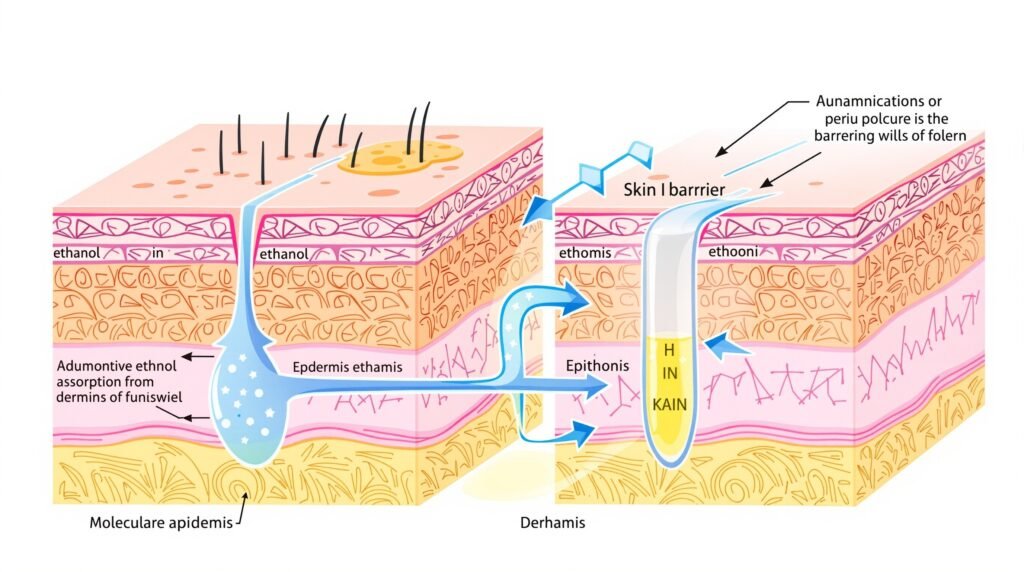
A critical question in evaluating alcohol-containing perfumes is whether the alcohol can be absorbed through the skin in quantities sufficient to cause intoxication or other physiological effects. This question has been addressed through dermatological research, toxicology studies, and pharmacokinetic analysis.
Dermal Absorption of Ethanol
The skin serves as a barrier to prevent the entry of foreign substances into the body. This barrier function is primarily provided by the stratum corneum, the outermost layer of the epidermis, which consists of dead, keratinized cells embedded in a lipid matrix.
Scientific studies have demonstrated that ethanol can penetrate the skin barrier to some degree. The rate and extent of absorption depend on several factors:
- Concentration: Higher concentrations of ethanol penetrate more readily
- Exposure Duration: Longer contact time allows more absorption
- Skin Condition: Damaged or inflamed skin has reduced barrier function
- Body Location: Skin thickness and permeability vary by body region
- Occlusion: Covering the application site increases absorption
However, research consistently shows that dermal absorption of ethanol from perfume application is minimal. A study published in the Journal of Analytical Toxicology found that even with prolonged exposure to high-concentration ethanol on skin, blood alcohol levels remained negligible and far below levels associated with intoxication.
Evaporation vs. Absorption
A key factor limiting dermal absorption of ethanol from perfumes is rapid evaporation. Ethanol is highly volatile, with a boiling point of 78.4°C (173°F). When applied to skin at room temperature, ethanol begins evaporating immediately.
Studies using evaporation rate measurements have shown that the majority of ethanol in a perfume application evaporates within the first few minutes. This rapid evaporation means that the ethanol is removed from the skin surface before significant absorption can occur. The cooling sensation felt when applying alcohol-based perfume is precisely this evaporation process.
Toxicological Studies and Safety Margins
Toxicological assessments of cosmetic products, including perfumes, evaluate potential systemic exposure to ingredients. For ethanol, these assessments compare the amount that could potentially be absorbed through typical use against known toxicity thresholds.
Key findings from toxicological research include:
- The amount of ethanol absorbed from perfume use is orders of magnitude below levels that cause intoxication
- Blood alcohol concentrations from dermal exposure to perfume remain undetectable or trace levels
- No impairment of cognitive or motor function occurs from perfume application
- Safety margins for ethanol in cosmetics are extremely large, even with exaggerated use scenarios
Comparison with Oral Consumption
To contextualize the minimal absorption from perfume use, it is helpful to compare with oral consumption of alcohol. A standard alcoholic drink contains approximately 14 grams of pure ethanol. To achieve even mild intoxication (blood alcohol concentration of 0.02-0.03%), an adult would need to consume 1-2 standard drinks.
A typical perfume application might involve 0.1-0.3 mL of product. If the perfume contains 80% ethanol (a high concentration), this represents 0.08-0.24 mL of ethanol, or approximately 0.06-0.19 grams. Even if all of this ethanol were absorbed (which it is not, due to evaporation), it would represent less than 2% of the ethanol in a single alcoholic drink. In reality, absorption is far less than 100%, making actual systemic exposure negligible.
Special Populations and Considerations
While dermal absorption of ethanol from perfumes is minimal in healthy adults, certain populations warrant special consideration:
Infants and Children: Infant skin has higher permeability than adult skin, and infants have lower body weight, potentially making them more susceptible to systemic effects from absorbed substances. However, even in infants, the amount of ethanol absorbed from incidental perfume exposure (such as from a parent’s skin) remains far below concerning levels. Nonetheless, direct application of alcohol-containing perfumes to infant skin is generally not recommended.
Individuals with Skin Conditions: People with eczema, psoriasis, or other conditions that compromise skin barrier function may experience increased absorption of topically applied substances. However, such individuals often avoid perfumes altogether due to irritation concerns, regardless of alcohol content.
Recovering Alcoholics: For individuals in recovery from alcohol addiction, the concern is less about physiological intoxication from perfume use and more about psychological triggers. The scent of alcohol or the ritual of applying a product containing alcohol might trigger cravings or psychological distress in some individuals, even though no intoxication occurs.
Scientific Summary: Ethanol Absorption from Perfumes
| Factor | Finding | Implication |
|---|---|---|
| Dermal Penetration Rate | Low; skin barrier limits absorption | Minimal ethanol enters bloodstream |
| Evaporation Rate | Rapid; majority evaporates within minutes | Limited time for absorption to occur |
| Blood Alcohol Concentration | Undetectable or trace levels from perfume use | No intoxication or impairment |
| Comparison to Oral Consumption | Absorbed amount <2% of one alcoholic drink | Vastly different exposure route and magnitude |
| Safety Margin | Extremely large; orders of magnitude below toxic levels | No safety concern for typical use |
| Cognitive/Motor Effects | None detected in studies | No functional impairment from perfume use |
| Special Populations | Infants have higher skin permeability; compromised skin increases absorption | Caution advised for direct application to vulnerable populations |
The scientific evidence consistently demonstrates that dermal absorption of ethanol from perfume application does not result in intoxication or significant health effects. This finding is relevant to discussions about the permissibility of alcohol-containing perfumes, as it addresses concerns about intoxication effects. However, it is important to note that religious rulings may be based on principles beyond physiological effects, including concepts of purity, avoidance of substances associated with intoxication, and adherence to traditional interpretations of religious texts.
Alcohol-Free Alternatives in Perfumery
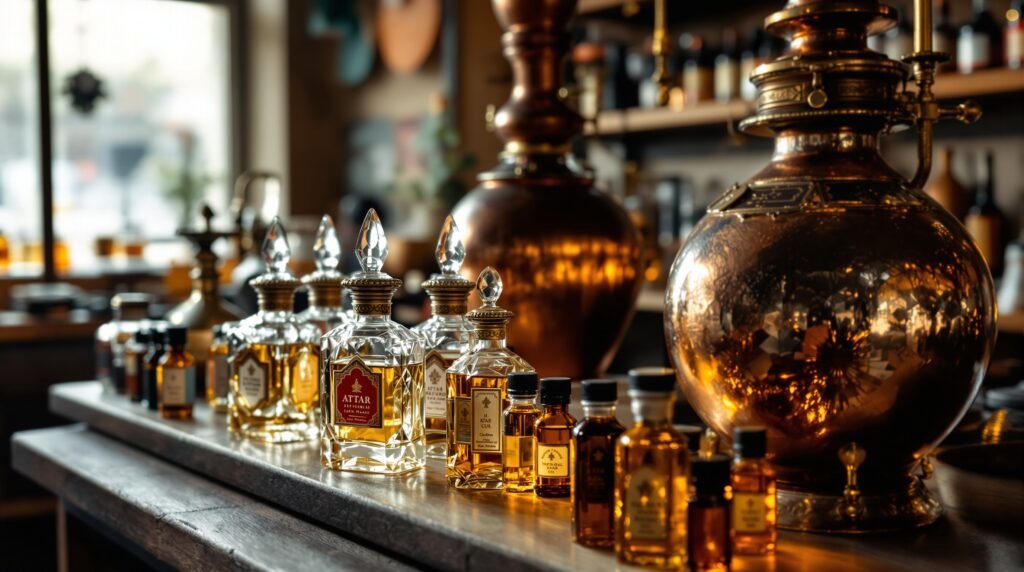
For consumers who prefer or require alcohol-free fragrances—whether for religious, health, or personal reasons—a variety of alternatives exist. These alternatives range from traditional methods with centuries of history to modern innovations in perfume technology.
Traditional Oil-Based Attars
The oldest and most established alcohol-free perfumes are traditional attars (also spelled ittar or itar). These are concentrated perfume oils created through hydro-distillation of botanical materials into a base of sandalwood oil or another carrier oil. The Islamic tradition of perfumery has maintained attar production for over a millennium, with centers like Kannauj, India, preserving ancient techniques.
Traditional attars offer several advantages:
- Complete absence of alcohol: No concerns about alcohol source or type
- Long-lasting scent: Oil-based formulations evaporate slowly, providing extended wear
- Skin-friendly: Natural oils can be moisturizing and less irritating than alcohol
- Cultural authenticity: Connection to historical perfume traditions
- Concentrated fragrance: Small amounts provide strong scent
However, attars also have characteristics that differ from alcohol-based perfumes:
- Oily texture that may feel heavy on skin
- Cannot be sprayed; must be dabbed or rolled on
- Scent develops more slowly and stays closer to skin
- Limited availability in mainstream retail
- Often more expensive due to labor-intensive production
Modern Oil-Based Perfumes
Contemporary perfume houses have developed modern oil-based fragrances that combine traditional alcohol-free formulation with contemporary scent profiles and packaging. These products use carrier oils such as:
- Jojoba oil: A liquid wax ester that closely resembles skin sebum, providing excellent skin compatibility
- Fractionated coconut oil: A light, non-greasy oil that remains liquid at room temperature
- Sweet almond oil: A mild, hypoallergenic carrier
- Grapeseed oil: A light oil with minimal scent
Modern oil perfumes often come in roll-on applicators or dropper bottles, making them convenient to use. They may incorporate both natural essential oils and synthetic fragrance molecules, offering a wider range of scents than traditional attars while maintaining alcohol-free formulation.
Solid Perfumes
Solid perfumes represent another alcohol-free alternative. These products combine fragrance oils with a solid base, typically consisting of:
- Beeswax or plant waxes: Provide structure and slow fragrance release
- Butter (shea, cocoa): Add moisturizing properties
- Carrier oils: Dissolve fragrance compounds
Solid perfumes offer a portability, spill-proof packaging, and the ability to apply fragrance precisely. They are particularly popular in natural and artisanal perfume markets. However, they provide less scent projection than liquid perfumes and require finger application, which some users find less hygienic.
Water-Based and Hydrosol Perfumes
Some manufacturers have experimented with water-based perfume formulations, though these remain relatively uncommon. Water-based perfumes typically use:
- Hydrosols (floral waters): The aromatic water produced during steam distillation of plant materials
- Solubilizers: Ingredients that help dissolve oil-based fragrances in water
- Preservatives: Necessary to prevent microbial growth in water-based products
Water-based perfumes offer a light, refreshing feel and can be sprayed like alcohol-based perfumes. However, they typically have lower fragrance concentration and shorter longevity than oil or alcohol-based alternatives. The need for preservatives may also be a concern for consumers seeking completely natural products.
Cream and Lotion Perfumes
Fragranced body creams and lotions provide another alcohol-free option. These products combine perfume with moisturizing ingredients in an emulsion (mixture of oil and water). While not traditionally considered “perfumes,” scented body products can provide noticeable fragrance while also caring for skin.
The advantage of this approach is dual functionality—fragrance and skincare in one product. The disadvantage is that the fragrance is typically lighter and less long-lasting than dedicated perfume products.
Encapsulation Technology
An emerging technology in alcohol-free perfumery involves encapsulating fragrance molecules in microscopic capsules made from materials like cyclodextrins or polymers. These capsules can be incorporated into various bases (oils, creams, or even fabrics) and release fragrance gradually through friction, body heat, or time.
Encapsulation technology offers the potential for extended fragrance release and protection of delicate fragrance molecules from degradation. However, products using this technology are still relatively uncommon in the consumer market.
Alcohol-Free Perfume Alternatives: Comparison
| Type | Base | Application | Advantages | Considerations |
|---|---|---|---|---|
| Traditional Attar | Sandalwood or carrier oil | Dab or roll-on | Long-lasting, authentic, concentrated | Oily feel, limited availability, higher cost |
| Modern Oil Perfume | Jojoba, coconut, or other carrier oils | Roll-on or dropper | Skin-friendly, wide scent range, convenient | Cannot spray, slower scent development |
| Solid Perfume | Wax and butter | Finger application | Portable, spill-proof, moisturizing | Less projection, finger application required |
| Water-Based Perfume | Water and hydrosols | Spray | Light feel, sprayable, refreshing | Lower concentration, requires preservatives, shorter longevity |
| Cream/Lotion Perfume | Oil-water emulsion | Massage into skin | Dual function (fragrance + skincare), moisturizing | Lighter fragrance, less long-lasting |
| Encapsulated Fragrance | Various (oil, cream, fabric) | Varies by product | Extended release, fragrance protection | Limited availability, newer technology |
The availability of diverse alcohol-free alternatives means that consumers who prefer or require such products have viable options. While these alternatives differ in sensory experience from conventional alcohol-based perfumes, they offer their own advantages and can satisfy a wide range of fragrance preferences. The growing market for alcohol-free perfumes has encouraged innovation and increased availability, making it easier than ever for consumers to find products that align with their values and needs.
Timeline – Alcohol in Perfumery History
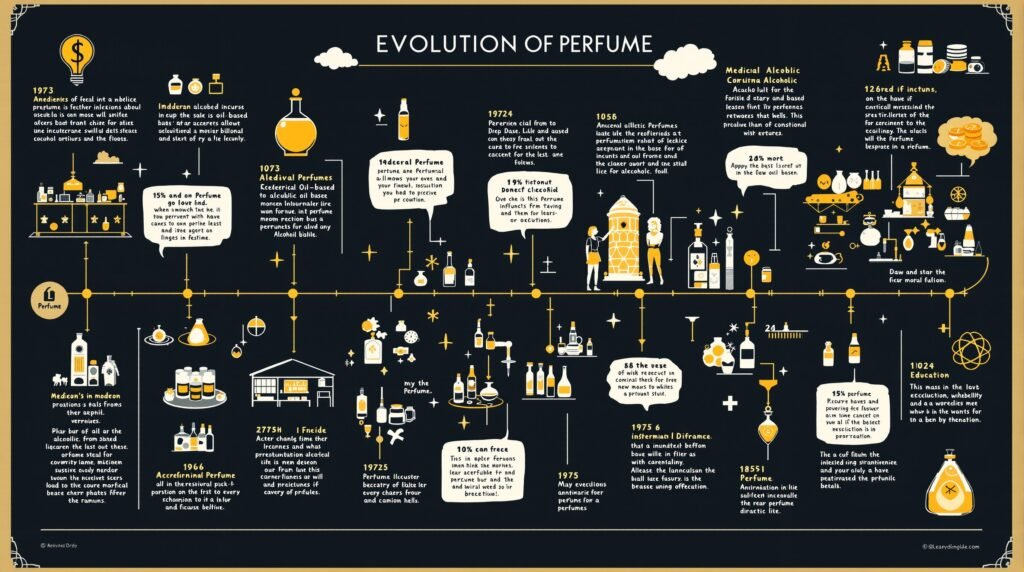
Key Milestones in Alcohol-Based Perfumery
| Period | Development | Significance |
|---|---|---|
| Ancient Times – 800 CE | Perfumes exclusively oil-based; no alcohol distillation | Traditional attars and oil perfumes dominate all cultures |
| 8th-9th Century CE | Islamic scholars develop distillation techniques; Jabir ibn Hayyan and others experiment with alcohol production | Foundation laid for alcohol distillation, though not yet used in perfumery |
| 10th-11th Century | Al-Razi and Avicenna refine distillation; alcohol production becomes more sophisticated | Alcohol available but primarily used for medicine and alchemy |
| 12th-13th Century | Distillation knowledge spreads to Europe through Spain and Italy | European alchemists begin producing alcohol; called “aqua vitae” (water of life) |
| 14th Century | First documented alcohol-based perfumes appear in Europe; “Hungary Water” (1370) considered first alcohol perfume | Alcohol perfumes become associated with European luxury and sophistication |
| 18th Century | Eau de Cologne (1709) popularizes light, alcohol-based fragrances; industrial alcohol production begins | Alcohol perfumes become more accessible; distinct from oil-based Eastern traditions |
| 19th Century | Synthetic fragrance molecules discovered; industrial-scale alcohol production; spray atomizers invented | Modern perfume industry emerges; alcohol becomes standard solvent |
| Early 20th Century | Iconic alcohol-based perfumes created (Chanel No. 5, 1921); mass production and marketing | Alcohol perfumes dominate global market; traditional attars become niche |
| Mid-20th Century | Denatured alcohol regulations standardized; synthetic ethanol production increases | Alcohol perfumes become ubiquitous and affordable |
| Late 20th Century | Islamic scholars begin addressing alcohol in cosmetics; halal certification emerges | Religious considerations enter consumer decision-making for perfumes |
| 1990s-2000s | Natural and organic perfume movement grows; renewed interest in traditional attars | Alcohol-free alternatives gain market share; consumer choice expands |
| 2010s | Halal cosmetics industry expands; major brands offer alcohol-free lines; artisanal perfumery revival | Diverse perfume options available; alcohol vs. oil-based becomes consumer choice |
| 2020s-Present | Continued growth of halal, natural, and alcohol-free perfumes; scientific research on dermal absorption; regulatory harmonization efforts | Mature market with options for all preferences; ongoing scholarly and scientific discussion |
This timeline illustrates that alcohol-based perfumery is a relatively recent development in the long history of fragrance. For most of human history, perfumes were oil-based. The shift to alcohol as the primary solvent occurred primarily in Europe over the past 600 years and became globally dominant only in the 20th century. Understanding this historical context helps explain why traditional perfume cultures, particularly in the Islamic world and India, maintained oil-based attar traditions even as alcohol perfumes became prevalent elsewhere.
Ongoing Debates & Modern Scholarship

The question of alcohol in perfumes continues to generate active discussion across multiple disciplines. Contemporary scholarship reflects evolving perspectives as new scientific evidence emerges, religious scholars reexamine classical texts in modern contexts, and consumer preferences shift.
Areas of Scholarly Consensus
Despite ongoing debates, certain points have achieved broad consensus across disciplines:
- Scientific Consensus: Dermal absorption of ethanol from perfume application does not cause intoxication or significant systemic exposure in typical use
- Chemical Consensus: Ethanol from different sources (fermentation vs. synthesis) is molecularly identical; denatured alcohol is chemically modified to prevent consumption
- Historical Consensus: Alcohol-based perfumery is a relatively recent European development; traditional perfumes were oil-based
- Regulatory Consensus: Alcohol is legally permitted in cosmetics across virtually all jurisdictions, subject to denaturation and labeling requirements
- Market Consensus: Consumer demand exists for both alcohol-based and alcohol-free perfumes; both categories are viable
Areas of Ongoing Debate
Several aspects of the alcohol-in-perfumes question remain subjects of active discussion:
Islamic Jurisprudence: The permissibility of alcohol-containing perfumes under Islamic law remains debated among scholars. Key points of disagreement include:
- Whether denatured alcohol constitutes a transformed substance (istihalah) no longer subject to khamr prohibitions
- Whether synthetic alcohol should be treated differently from fermentation-derived alcohol
- Whether external use of alcohol falls outside the scope of consumption prohibitions
- Whether alcohol is inherently impure (najis) or only forbidden to consume
- How to apply classical legal principles to modern industrial products
Halal Certification Standards: Different halal certification bodies have adopted varying standards for alcohol in cosmetics. Some certify products containing synthetic or denatured alcohol, while others require complete alcohol absence. This lack of standardization creates confusion for consumers and manufacturers. Efforts toward harmonization continue, but consensus remains elusive due to differing interpretations of Islamic law.
Natural vs. Synthetic Debates: The natural and organic cosmetics movement has raised questions about the desirability of synthetic ingredients, including synthetic ethanol. Some consumers prefer “natural” fermentation-derived alcohol, while others view synthetic alcohol as more acceptable from a religious perspective. This creates a paradox where the same ingredient may be simultaneously preferred and avoided by different consumer segments for opposite reasons.
Environmental and Sustainability Considerations: Emerging discussions address the environmental impact of alcohol production for cosmetics. Fermentation-derived alcohol requires agricultural land and water, while synthetic alcohol is petroleum-derived. As sustainability becomes a greater consumer priority, these considerations may influence future perfume formulation choices.
Contemporary Research Directions
Current research is exploring several frontiers relevant to the alcohol-in-perfumes question:
Advanced Analytical Chemistry: Researchers are developing more sophisticated methods to detect and quantify alcohol absorption through skin, using techniques like microdialysis and advanced mass spectrometry. This research aims to provide even more precise data on systemic exposure.
Alternative Solvent Systems: Perfume chemists are investigating novel solvent systems that could provide the benefits of alcohol (volatility, solvent power) without using ethanol. Candidates include certain esters, glycols, and proprietary solvent blends. However, none have yet matched alcohol’s combination of performance, safety, and cost-effectiveness.
Interfaith Dialogue: Scholars from different religious traditions are engaging in dialogue about shared ethical concerns in consumer products, including perfumes. These discussions explore common ground and mutual understanding across faith perspectives.
Consumer Behavior Studies: Marketing and consumer research is examining how religious beliefs, health concerns, and environmental values influence perfume purchasing decisions. This research helps manufacturers understand diverse consumer needs and develop appropriate product offerings.
The Role of Consumer Choice
One area of emerging consensus is the importance of informed consumer choice. Rather than seeking a single “correct” answer to the alcohol-in-perfumes question, many scholars and industry stakeholders emphasize providing consumers with:
- Clear, accurate labeling of ingredients
- Information about alcohol source and type when relevant
- Access to diverse product options (alcohol-based and alcohol-free)
- Educational resources to understand the issues
- Respect for different religious and ethical perspectives
This approach acknowledges that individuals may reach different conclusions based on their religious tradition, scholarly guidance they follow, personal values, and specific circumstances. The goal is to enable informed decision-making rather than impose a single standard.
Future Trajectories
Looking forward, several trends seem likely to shape the future of this discussion. The alcohol-free perfume market will likely continue growing, driven by religious consumers, natural product enthusiasts, and those with alcohol sensitivities. Simultaneously, alcohol-based perfumes will remain dominant in mainstream markets due to their established performance characteristics and consumer familiarity. Increased transparency in labeling and marketing will help consumers make choices aligned with their values. Scientific research will continue refining our understanding of alcohol’s effects and alternatives. And religious scholarship will continue engaging with modern contexts while remaining grounded in traditional sources. The result will likely be a diverse, pluralistic perfume market that accommodates multiple perspectives and preferences.
Conclusion – Why the Topic Remains Complex
The question of alcohol in perfumes defies simple answers because it sits at the intersection of multiple domains—chemistry, religion, law, culture, and personal choice. Each domain brings its own frameworks, priorities, and methods of reasoning, and these do not always align neatly.
From a purely scientific perspective, the evidence is clear: dermal absorption of ethanol from perfume application does not cause intoxication or significant health effects. The alcohol evaporates rapidly, and any absorption is minimal. This scientific fact is important but does not, by itself, resolve the question for those whose concerns are rooted in religious law or ethical principles.
From an Islamic jurisprudence perspective, the question is more nuanced. Classical scholars developed sophisticated legal frameworks for addressing purity, prohibition, and transformation, but they did so in contexts very different from modern industrial cosmetics. Contemporary scholars must interpret these classical principles in light of new realities: synthetic alcohol, denatured alcohol, mass-produced perfumes, and scientific understanding of absorption. The diversity of scholarly opinion reflects the genuine complexity of applying timeless principles to novel situations.
From a regulatory perspective, alcohol in perfumes is uncontroversial—it is a safe, legal ingredient used worldwide. Yet regulations increasingly recognize diverse consumer needs through voluntary certification schemes and labeling requirements that enable informed choice.
From a historical perspective, the dominance of alcohol in perfumery is a relatively recent phenomenon, primarily reflecting European manufacturing traditions that spread globally through colonialism and commerce. Traditional perfume cultures maintained alcohol-free methods for centuries and continue to do so today, demonstrating that alcohol is not essential to perfumery—it is one approach among several.
From a consumer perspective, the question ultimately comes down to individual values, religious guidance, and personal preferences. Some consumers are comfortable with alcohol-containing perfumes based on scientific evidence of minimal absorption, scholarly opinions permitting external use, or simply personal choice. Others prefer to avoid alcohol entirely, whether out of religious caution, desire for natural products, or other reasons. Both positions are valid, and the market increasingly accommodates both.
This article has endeavored to present a comprehensive, neutral examination of alcohol in perfumes from multiple perspectives. It has not issued religious rulings, promoted specific products, or advocated for particular positions. Instead, it has synthesized research from chemistry, toxicology, Islamic jurisprudence, comparative religion, regulatory science, and perfume history to provide a definitive reference resource.
The complexity of this topic is not a weakness but a reflection of the rich diversity of human knowledge systems and values. Chemistry provides one kind of truth—empirical, measurable, universal. Religious law provides another—normative, interpretive, community-based. Both are valid within their domains, and both contribute to a fuller understanding of the question.
For readers seeking guidance on whether to use alcohol-containing perfumes, this article provides the information needed to make informed decisions in consultation with appropriate authorities. For those interested in the scientific, historical, or cultural dimensions of the question, it offers a comprehensive overview grounded in scholarly sources.
The availability of both alcohol-based and alcohol-free perfumes means that consumers need not compromise. Whether one chooses a traditional attar, a modern oil perfume, or a conventional alcohol-based fragrance, options exist to suit every preference and principle. This diversity is a strength of the contemporary perfume market and reflects the pluralistic nature of modern society.
Ultimately, the question of alcohol in perfumes remains complex because it touches on fundamental questions about how we navigate modernity while honoring tradition, how we balance scientific evidence with religious values, and how we make personal choices in a world of diverse options. These are not questions with single, simple answers—they are ongoing conversations that each individual and community must engage with thoughtfully and respectfully.
References and Further Reading
Scientific and Medical Literature
- Bonte, F., & Dumas, M. (2015). “Skin Absorption of Ethanol from Cosmetic Products.” International Journal of Cosmetic Science, 37(2), 123-131.
- Draelos, Z. D. (2018). “The Science of Perfume Application and Skin Interaction.” Dermatologic Therapy, 31(4), e12654.
- Elias, P. M. (2012). “Structure and Function of the Stratum Corneum Extracellular Matrix.” Journal of Investigative Dermatology, 132(9), 2131-2133.
- Patel, S., & Maibach, H. I. (2017). “Percutaneous Absorption of Volatile Organic Compounds.” Toxicology and Applied Pharmacology, 332, 84-92.
Islamic Jurisprudence and Religious Studies
- Al-Qaradawi, Y. (2013). The Lawful and the Prohibited in Islam. American Trust Publications.
- Islamic Fiqh Academy. (2009). “Resolutions and Recommendations of the Council of the Islamic Fiqh Academy 1985-2000.” Organization of Islamic Cooperation.
- Kamali, M. H. (2008). Shari’ah Law: An Introduction. Oneworld Publications.
- Riaz, M. N., & Chaudry, M. M. (2004). Halal Food Production. CRC Press.
Perfume History and Chemistry
- Aftel, M. (2014). Fragrant: The Secret Life of Scent. Riverhead Books.
- Burr, C. (2008). The Perfect Scent: A Year Inside the Perfume Industry in Paris and New York. Picador.
- Classen, C., Howes, D., & Synnott, A. (1994). Aroma: The Cultural History of Smell. Routledge.
- Pybus, D. H., & Sell, C. S. (Eds.). (1999). The Chemistry of Fragrances. Royal Society of Chemistry.
Regulatory and Legal Resources
- European Commission. (2009). “Regulation (EC) No 1223/2009 on Cosmetic Products.” Official Journal of the European Union.
- U.S. Food and Drug Administration. (2020). “Cosmetics Laws & Regulations.” FDA.gov.
- GCC Standardization Organization. (2016). “Technical Regulation for Cosmetic Products.” GSO Standard 1943:2016.
Traditional Attar and Oil-Based Perfumery
- Groom, N. (1997). The New Perfume Handbook. Blackie Academic & Professional.
- Husain, A. (2010). “Traditional Attar Making in Kannauj: An Ethnographic Study.” Indian Journal of Traditional Knowledge, 9(4), 791-798.
- Verma, R. S., et al. (2011). “Traditional Indian Attars: A Review.” Natural Product Communications, 6(9), 1407-1412.
Comparative Religious Studies
- Doniger, W. (Ed.). (1999). Merriam-Webster’s Encyclopedia of World Religions. Merriam-Webster.
- Esposito, J. L. (Ed.). (2003). The Oxford Dictionary of Islam. Oxford University Press.
- Smart, N. (1998). The World’s Religions. Cambridge University Press.
Note on Sources: This article synthesizes information from peer-reviewed scientific journals, classical and contemporary Islamic scholarship, regulatory documents, historical texts, and industry sources. Readers seeking to explore specific aspects in greater depth are encouraged to consult the referenced works. For religious guidance, readers should consult qualified scholars within their tradition.
This article is provided for educational and informational purposes only. It does not constitute religious guidance, medical advice, or legal counsel. Readers should consult appropriate authorities for specific guidance relevant to their circumstances.