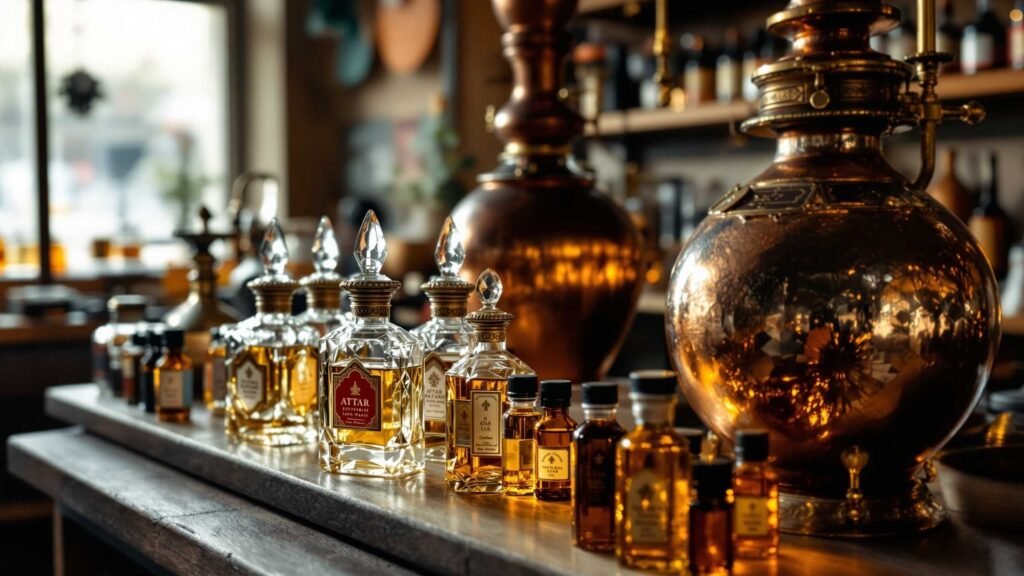
The relationship between fragrance and Islamic civilization extends across fourteen centuries, encompassing religious texts, scientific innovation, cultural practices, and economic networks. This relationship is documented in primary sources ranging from Hadith collections to medical treatises, from trade records to literary works. Understanding this documented history requires examining multiple dimensions: textual references to perfume in Islamic sources, the contributions of Muslim scholars to perfumery science, the role of fragrance in daily Muslim life, and the economic systems that supported attar production and trade.
This article approaches attar within Islamic civilization as a subject of historical and cultural documentation rather than religious instruction. It presents Hadith references academically, examining their historical context and authentication levels without issuing religious rulings. It explores scholarly contributions to perfumery science as part of the broader history of Islamic scientific achievement. It documents cultural practices surrounding fragrance use as anthropological phenomena shaped by religious, social, and economic factors.
The term “attar” itself reflects this Islamic cultural context. Derived from Arabic “عطر” (ʿiṭr), meaning fragrance or perfume, the word entered Persian, Urdu, Turkish, and other languages of Muslim-majority regions, demonstrating linguistic diffusion alongside cultural practices. While attar production predates Islam, Islamic civilization significantly shaped its development, creating distinctive traditions that persist in contemporary practice.
This study examines attar within Islamic civilization chronologically and thematically, beginning with pre-Islamic Arabian practices, proceeding through prophetic-era references and early caliphate developments, exploring the scientific contributions of the Islamic Golden Age, documenting daily-life practices and cultural etiquette, and concluding with contemporary interpretations and misconceptions. Throughout, the approach remains documentary and analytical, presenting historical evidence and scholarly perspectives without prescriptive religious guidance.
Attar in Pre-Islamic Arabia
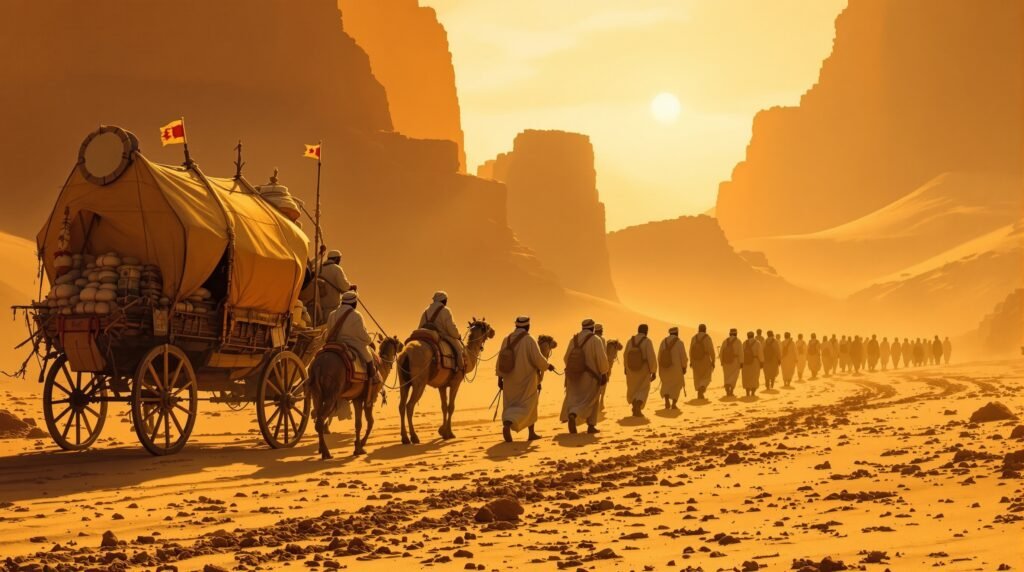
Pre-Islamic Arabian society possessed established aromatic traditions that provided the cultural foundation upon which Islamic practices would build. Archaeological and textual evidence documents extensive trade in frankincense, myrrh, and other aromatic resins, with Arabian merchants controlling lucrative trade routes connecting South Arabian production regions with Mediterranean and Asian markets.
The Incense Trade and Arabian Commerce
The Arabian Peninsula’s geographic position made it central to the ancient incense trade. South Arabian kingdoms—particularly the Sabaeans, Minaeans, and Himyarites—cultivated and harvested frankincense (Boswellia sacra) and myrrh (Commiphora myrrha), aromatic resins highly valued in ancient Mediterranean, Egyptian, and Mesopotamian civilizations. Caravans transported these materials northward through the Arabian Peninsula, creating wealth and establishing aromatics as fundamental to Arabian economic life.
Classical sources, including Pliny the Elder’s “Natural History” (1st century CE), document this trade extensively. Pliny describes the “Incense Road” through Arabia, noting the high prices commanded by Arabian aromatics and the wealth of Arabian merchants. This economic importance meant that aromatic materials were familiar to pre-Islamic Arabian society across social classes, though access to the finest products remained limited to elites.
Pre-Islamic Aromatic Practices
Pre-Islamic Arabian poetry, preserved in collections like the “Mu’allaqat,” contains numerous references to perfume and aromatic materials. These references indicate that fragrance use was associated with hospitality, social status, and personal grooming. Wealthy individuals applied perfumed oils and burned aromatic resins in their dwellings, practices that would continue into the Islamic period with modified cultural meanings.
The Kaaba in Mecca, even in pre-Islamic times, was reportedly perfumed with aromatic materials during certain periods, demonstrating the association between sacred spaces and fragrance that would intensify under Islam. While pre-Islamic religious practices differed fundamentally from Islamic monotheism, the cultural practice of using aromatics in sacred contexts provided continuity that facilitated Islamic adoption and adaptation of perfume use.
Continuity and Transformation
The advent of Islam in the 7th century CE did not erase pre-existing aromatic practices but rather transformed their cultural meanings and contexts. Economic networks remained largely intact, with Muslim merchants eventually expanding rather than replacing earlier trade routes. Cultural practices surrounding fragrance use continued but were reinterpreted through Islamic frameworks, particularly through prophetic example and religious texts. This pattern of continuity-with-transformation characterizes many aspects of early Islamic civilization’s relationship with pre-Islamic Arabian culture.
Prophetic Era References to Fragrance
Hadith literature—collections of reports about the Prophet Muhammad’s statements, actions, and tacit approvals—contains numerous references to perfume and fragrance. These references, documented by early Muslim scholars and transmitted through chains of narration (isnad), provide primary source material for understanding attitudes toward fragrance in early Islamic society. This section presents these references academically, noting their authentication levels and historical contexts without issuing religious rulings or prescriptions.
Documented Hadith References
Several Hadith collections classified as “sahih” (authentic) by traditional Islamic scholarship contain reports of the Prophet Muhammad’s appreciation for fragrance. Sahih al-Bukhari and Sahih Muslim, considered the most authoritative Hadith collections in Sunni tradition, include multiple narrations on this topic. For example, one widely cited narration states: “Three things from your world have been made beloved to me: women, perfume, and prayer has been made the comfort of my eyes” (reported in Sunan an-Nasa’i and other collections).
Another frequently referenced Hadith, found in Sahih Muslim, reports that the Prophet Muhammad stated: “Whoever is offered perfume should not refuse it, for it is light to carry and has a pleasant fragrance.” These and similar narrations established perfume use as a recommended practice (mustahabb) in Islamic jurisprudence, though scholars have debated specific applications and contexts throughout Islamic history.
Hadith literature also documents specific types of perfumes reportedly used or mentioned by the Prophet Muhammad. References to musk, ambergris, and various plant-based aromatics appear in multiple collections. One narration describes the Prophet’s preference for musk as a fragrance, while others mention the use of perfumed oils on the beard and hair. These specific references influenced later Muslim preferences for particular aromatic materials and application methods.
Authentication Levels and Scholarly Analysis
Islamic scholarship developed sophisticated methodologies for evaluating Hadith authenticity, examining both the chain of transmission (isnad) and the content (matn) of reports. Hadith are classified into categories including sahih (authentic), hasan (good), da’if (weak), and mawdu’ (fabricated), based on these evaluations. The perfume-related Hadith mentioned above are generally classified as sahih or hasan by traditional scholars, indicating strong chains of transmission and consistency with other authenticated reports.
However, some reports about perfume that circulate in popular literature have been classified as weak or fabricated by Hadith scholars. For instance, extremely detailed descriptions of specific perfume formulations attributed to the Prophet are often found to lack reliable chains of transmission. This scholarly scrutiny demonstrates the rigorous approach traditional Islamic scholarship applied to textual authentication, distinguishing between well-documented practices and later attributions.
Contextual Interpretation
Modern scholars of Islamic history and Hadith studies emphasize the importance of understanding these references within their 7th-century Arabian context. The Prophet Muhammad’s reported appreciation for perfume occurred within a society where fragrance use was already established but where access to water for frequent bathing was limited. Perfume served practical hygienic functions alongside aesthetic and social purposes. Additionally, the emphasis on pleasant fragrance in communal settings—particularly for congregational prayers—reflected concern for social consideration and community harmony. Understanding these contextual factors helps explain why perfume references appear in Hadith literature and how they were understood by early Muslim communities. For more on attar in prophetic tradition, see our dedicated study.
Selected Hadith References to Fragrance: Academic Documentation
| Hadith Source | Authentication Level | Content Summary | Historical Context |
|---|---|---|---|
| Sahih Muslim | Sahih (Authentic) | Not refusing offered perfume | Social etiquette; hospitality customs |
| Sunan an-Nasa’i | Sahih | Three beloved things including perfume | Personal preferences; aesthetic appreciation |
| Sahih al-Bukhari | Sahih | Using perfume on Fridays | Congregational prayer etiquette |
| Sunan Abu Dawud | Hasan (Good) | Musk as preferred fragrance | Specific aromatic preferences |
| Jami’ at-Tirmidhi | Hasan | Perfume as gift-giving | Social bonding; generosity |
| Various collections | Da’if (Weak) | Detailed perfume formulations | Later attributions; unreliable chains |
Note: Authentication classifications reflect traditional Islamic Hadith scholarship. This table is for academic documentation purposes and does not constitute religious guidance.
Attar in the Early Caliphates
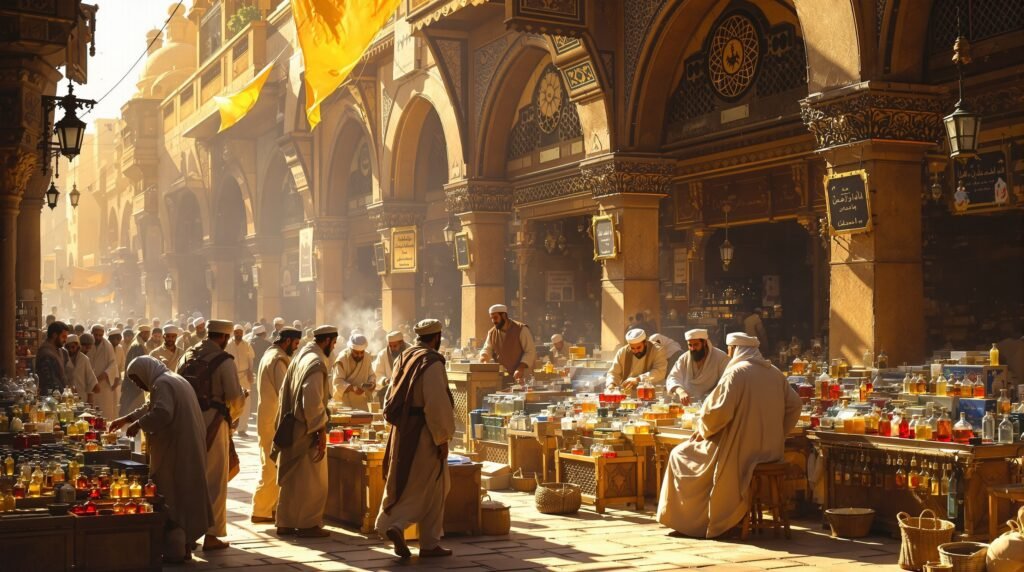
The rapid expansion of Islamic civilization during the Rashidun (632-661 CE) and Umayyad (661-750 CE) caliphates created vast territories under Muslim rule, connecting diverse aromatic traditions and establishing economic networks that would support perfumery development. Historical records from this period document the integration of perfume use into emerging Islamic social structures and the beginning of distinctively Islamic aromatic practices.
Social Usage and Cultural Integration
Early Islamic sources describe perfume use in various social contexts. Historical accounts report that the Rashidun caliphs maintained the practice of perfuming mosques, particularly for Friday congregational prayers. This practice, rooted in prophetic example, became institutionalized as Islamic religious architecture developed. Mosques in major cities employed staff responsible for maintaining cleanliness and pleasant fragrance, establishing perfume use as part of Islamic sacred space management.
Personal perfume use also became associated with Islamic identity during this period. Historical chronicles describe Muslim armies and travelers as recognizable partly through their use of perfume, which distinguished them from populations in newly conquered territories. This association between fragrance and Muslim identity reinforced perfume use as a cultural marker, though the extent of this practice likely varied by region and social class.
Trade and Craftsmanship
The expansion of Islamic rule incorporated major perfume production regions into a single political and economic system. Syrian cities, particularly Damascus, had established perfumery traditions predating Islam. Persian territories brought sophisticated aromatic knowledge and rose cultivation expertise. Egyptian production of aromatic materials continued under Muslim rule. This integration created opportunities for knowledge exchange and trade that would accelerate perfumery development.
Urban centers of the early caliphates developed specialized perfume markets (suqs) where perfumers, known as “‘attarin,” established shops and workshops. These markets became important economic and social spaces, with perfumers forming professional guilds that regulated quality, training, and trade practices. The development of these institutional structures indicates that perfumery had become a significant economic activity within early Islamic urban society.
The Abbasid Revolution and Cultural Flourishing
The Abbasid Revolution (750 CE) and the subsequent establishment of Baghdad as the caliphate’s capital marked a new phase in Islamic civilization’s relationship with perfumery. The Abbasid court, influenced by Persian administrative traditions and cultural practices, elevated perfume use to unprecedented levels of sophistication. Court records describe elaborate perfume ceremonies, the employment of master perfumers in royal service, and the development of complex aromatic formulations for elite consumption. This courtly patronage would provide economic support and cultural prestige that encouraged perfumery innovation during the Islamic Golden Age.
Scholarly Engagement with Fragrance
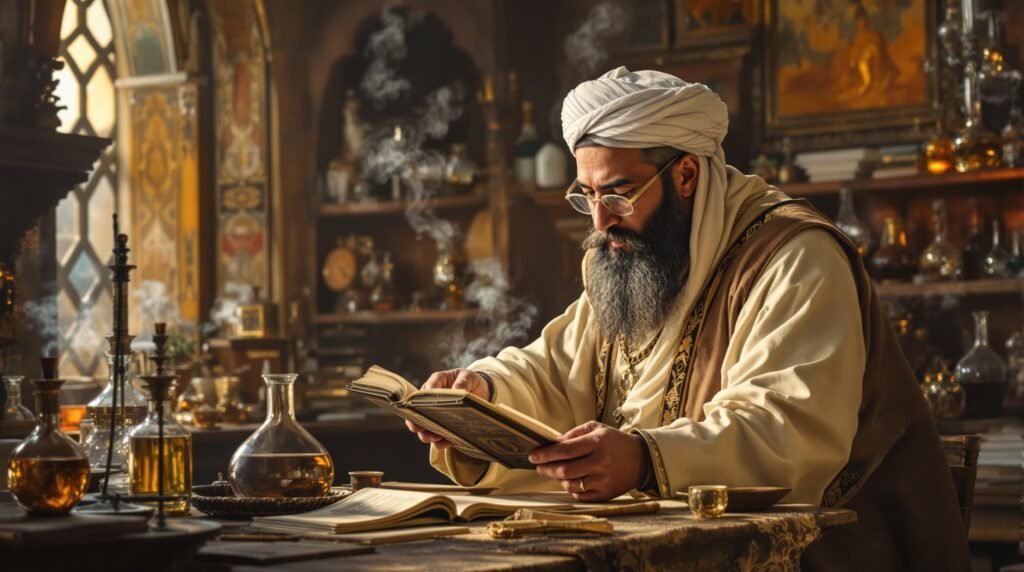
The Islamic Golden Age (8th-14th centuries CE) produced remarkable scholarly engagement with perfumery, as Muslim physicians, chemists, and natural philosophers investigated aromatic materials scientifically. This scholarly activity, documented in numerous Arabic texts, advanced both theoretical understanding and practical techniques, establishing foundations that would influence perfumery globally. For broader context on this period’s contributions, see our article on the history of attar.
Medical and Pharmaceutical Perspectives
Islamic medical scholars approached perfumery within the framework of humoral medicine inherited from Greek sources but significantly expanded through original research. Physicians viewed aromatic substances as therapeutic agents capable of affecting bodily humors and treating various ailments. This medical perspective motivated systematic investigation of aromatic materials’ properties and effects.
Al-Razi (Rhazes, 854-925 CE), one of the most influential physicians of the Islamic Golden Age, devoted sections of his medical encyclopedia “Kitab al-Hawi” (The Comprehensive Book) to aromatic materials and their therapeutic applications. He described methods for preparing aromatic medicines, discussed the properties of various perfume ingredients, and provided guidelines for their medical use. His work demonstrates the integration of perfumery knowledge into mainstream Islamic medical practice.
Ibn Sina (Avicenna, 980-1037 CE) made even more significant contributions, as discussed in our historical overview. His refinement of distillation techniques and successful extraction of rose oil represented major technical advances. Beyond technique, Avicenna’s theoretical framework for understanding aromatic substances—their qualities, effects, and interactions—provided conceptual tools that guided subsequent perfumery development. His “Canon of Medicine” became a standard medical text for centuries, ensuring wide dissemination of his perfumery knowledge.
Chemical and Alchemical Investigations
Islamic alchemists and chemists investigated aromatic materials as part of broader studies of matter transformation. Jabir ibn Hayyan (Geber, c. 721-815 CE), often called the “father of chemistry,” described distillation apparatus and techniques in his numerous works. While his primary focus was alchemical transformation of metals, his technical innovations in distillation equipment and methodology directly benefited perfumery.
Al-Kindi’s “Book of the Chemistry of Perfume and Distillations” (9th century CE) represents the first known systematic treatise devoted specifically to perfumery. This work contained over 100 recipes for perfumes, aromatic oils, and scented products, along with detailed instructions for constructing distillation apparatus. Al-Kindi’s methodology emphasized experimentation, precise measurement, and systematic documentation—approaches that characterized Islamic scientific practice more broadly.
Botanical and Agricultural Studies
Islamic scholars produced extensive botanical literature documenting aromatic plants, their cultivation, and their properties. Ibn al-Baitar (1197-1248 CE) compiled a massive pharmacological encyclopedia, “Kitab al-Jami fi al-Adwiya al-Mufrada” (The Complete Book of Simple Drugs), describing over 1,400 plants including detailed information about aromatic species. His work synthesized knowledge from Greek, Persian, Indian, and Arab sources while adding original observations from his travels throughout the Islamic world.
Agricultural treatises from Islamic Spain (Al-Andalus) and other regions provided practical guidance for cultivating aromatic plants. These texts described optimal growing conditions, harvesting times, and processing methods for roses, jasmine, and other perfume materials. This agricultural knowledge supported the development of specialized cultivation regions that supplied raw materials for perfume production, creating integrated systems linking agriculture, chemistry, and commerce.
Major Islamic Scholars and Their Perfumery Contributions
| Scholar | Period | Field | Key Contribution |
|---|---|---|---|
| Jabir ibn Hayyan | c. 721-815 CE | Chemistry/Alchemy | Advanced distillation apparatus design |
| Al-Kindi | 801-873 CE | Philosophy/Chemistry | First systematic perfumery treatise; 100+ formulas |
| Al-Razi (Rhazes) | 854-925 CE | Medicine/Chemistry | Medical applications of aromatics; therapeutic uses |
| Ibn Sina (Avicenna) | 980-1037 CE | Medicine/Philosophy | Refined steam distillation; rose oil extraction |
| Ibn al-Baitar | 1197-1248 CE | Botany/Pharmacology | Catalogued 1,400+ plants including aromatic species |
| Ibn al-‘Awwam | 12th century CE | Agriculture | Cultivation methods for aromatic plants |
Attar in Daily Muslim Life
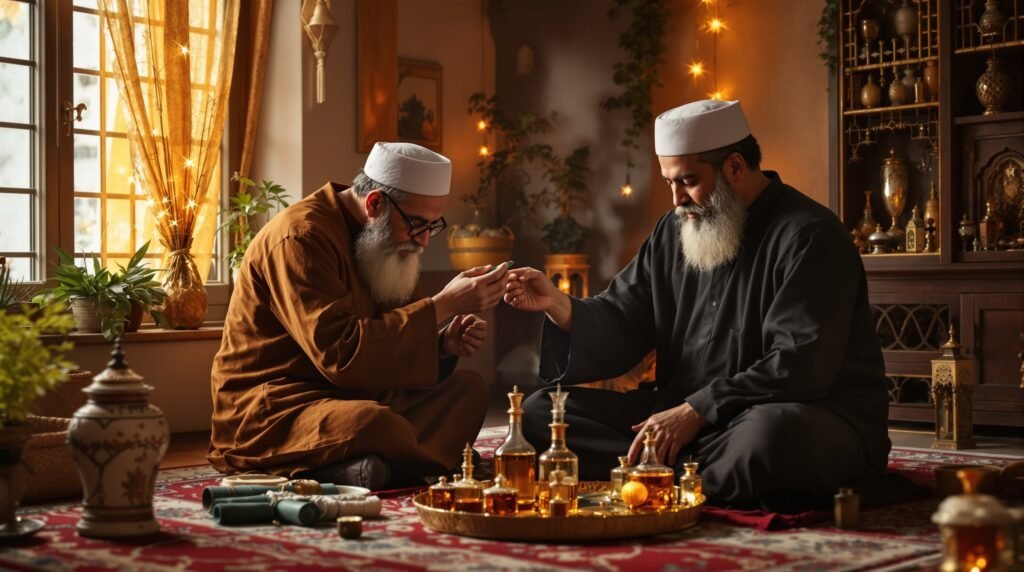
Beyond scholarly investigation and elite consumption, perfume became integrated into daily Muslim life across social classes, shaped by religious recommendations, cultural customs, and practical considerations. Historical and ethnographic sources document diverse practices surrounding perfume use in various contexts and regions of the Islamic world.
Cleanliness and Personal Grooming
Islamic religious texts emphasize cleanliness (tahara) as both a physical and spiritual state. Perfume use became associated with this emphasis on cleanliness, serving as both a practical means of maintaining pleasant personal fragrance and a symbolic expression of spiritual purity. Historical sources describe perfume application as part of grooming routines, particularly before religious observances and social gatherings.
The specific practice of applying perfume on Fridays before congregational prayer, mentioned in Hadith literature, became widespread across Muslim societies. This practice served multiple functions: it demonstrated respect for communal worship, ensured pleasant conditions in crowded prayer spaces, and expressed adherence to prophetic example. The institutionalization of this practice created regular demand for perfumes accessible to ordinary Muslims, supporting a market beyond luxury goods for elites.
Social Etiquette and Hospitality
Perfume became deeply embedded in Islamic social etiquette, particularly regarding hospitality. Historical accounts and travel literature describe the custom of offering perfume to guests as a sign of welcome and respect. This practice, documented across diverse regions from Al-Andalus to Central Asia, created social expectations that reinforced perfume’s cultural importance.
The exchange of perfumes as gifts also became an established social practice. Historical sources describe perfume-giving on various occasions: religious festivals, weddings, births, and as tokens of friendship or political alliance. The value placed on perfume gifts varied with the rarity and quality of the fragrance, creating a hierarchy of aromatic materials that reflected and reinforced social distinctions.
Gender and Context Considerations
Islamic jurisprudence developed guidelines regarding perfume use in different contexts, particularly concerning gender and public versus private spaces. While specific rulings varied among legal schools and scholars, general patterns emerged: strong, projecting fragrances were considered appropriate for men in public spaces, while women’s perfume use in public was subject to various restrictions aimed at maintaining modesty. However, in private and women-only spaces, elaborate perfume use by women was not only permitted but culturally encouraged.
These gendered practices, documented in legal texts and social histories, shaped perfume production and marketing. Certain aromatic materials became associated with masculine or feminine use, though these associations varied by region and period. The development of distinct men’s and women’s perfume traditions within Islamic societies created diverse market segments and encouraged specialized production. For contemporary perspectives on this, see our guides on Islamic fragrance practices.
Cultural Etiquette of Attar Use
The integration of perfume into Islamic civilization produced elaborate etiquette systems governing its use in various contexts. These systems, documented in adab (etiquette) literature and legal texts, reflect the intersection of religious principles, social customs, and aesthetic values that characterized Islamic cultural development.
Public Spaces and Communal Consideration
Islamic etiquette literature emphasizes consideration for others in shared spaces, and perfume use became subject to these principles. While pleasant fragrance was encouraged, particularly for congregational prayers, excessive or overpowering perfume was criticized as inconsiderate. This balance between encouraged fragrance use and moderation reflects broader Islamic ethical principles regarding moderation (wasatiyya) in all matters.
Specific guidelines developed for different public contexts. In mosques, pleasant but not overpowering fragrance was recommended. In markets and commercial spaces, perfume use was common but subject to social norms about appropriateness. In educational settings, scholars debated whether strong perfumes might distract from learning, with various opinions emerging across different legal schools and time periods.
Worship Settings and Religious Observance
The use of perfume in worship contexts received particular attention in Islamic legal and etiquette literature. While perfume was generally encouraged for congregational prayers, specific situations required different approaches. During the pilgrimage to Mecca (Hajj), pilgrims in the state of ritual consecration (ihram) are prohibited from using perfume, creating a temporary exception to general encouragement of fragrance use.
The perfuming of mosques themselves became an established practice, with endowments (waqf) sometimes specifically designated for purchasing perfumes and incense for mosque use. Historical records describe elaborate perfuming ceremonies in major mosques, particularly during Ramadan and on special occasions. These practices transformed mosques into aromatic spaces where fragrance contributed to the sensory experience of worship.
Hospitality Traditions and Social Bonding
The offering of perfume to guests became a refined art in Islamic hospitality traditions. Historical sources describe elaborate perfume presentation rituals, with hosts offering guests a selection of fragrances from ornate containers. The quality and variety of perfumes offered indicated the host’s wealth and the guest’s importance, creating a subtle language of social communication through aromatic materials. These practices, documented across the Islamic world from medieval Andalusia to Mughal India, demonstrate how perfume transcended mere personal grooming to become a medium of social interaction and cultural expression.
Documented Perfume Etiquette Across Islamic Contexts
| Context | Documented Practice | Source Type | Cultural Function |
|---|---|---|---|
| Friday Prayer | Application of pleasant fragrance before attendance | Hadith, fiqh texts | Communal consideration; prophetic example |
| Guest Reception | Offering perfume from ornate containers | Adab literature, travel accounts | Hospitality; social honor |
| Wedding Ceremonies | Elaborate perfuming of bride and groom | Historical chronicles, cultural practices | Celebration; blessing; beauty |
| Hajj (Pilgrimage) | Prohibition during ihram state | Fiqh texts, pilgrimage guides | Ritual purity; spiritual focus |
| Eid Celebrations | Special perfumes for festival occasions | Historical accounts, cultural practices | Joy; celebration; community |
| Scholarly Gatherings | Moderate fragrance; avoiding distraction | Educational texts, scholarly biographies | Respect; focus; intellectual atmosphere |
Trade Routes and the Spread of Attar in the Muslim World
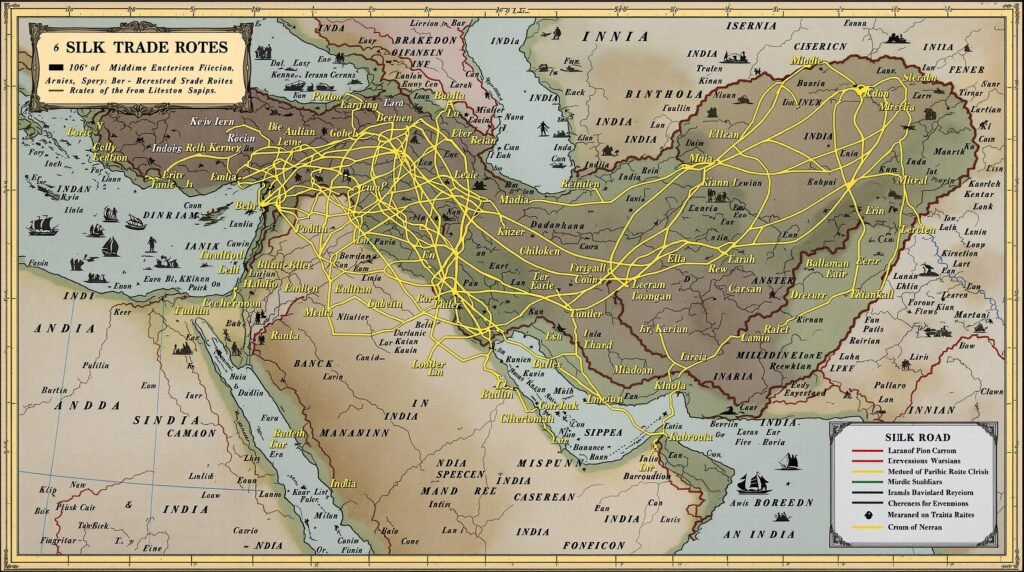
The vast geographic extent of Islamic civilization, combined with Muslim merchants’ dominance of long-distance trade networks, created unprecedented opportunities for aromatic material exchange and perfumery knowledge dissemination. These trade networks, documented in commercial records, travel accounts, and geographic texts, connected aromatic production regions from Spain to Southeast Asia.
The Silk Road and Overland Trade
Muslim merchants played central roles in Silk Road trade from the 8th century onward, controlling key segments of the route and establishing commercial networks that facilitated aromatic material transport. Caravans carried not only silk and spices but also perfumes, aromatic resins, and raw materials for perfume production. Cities along the Silk Road—Samarkand, Bukhara, Baghdad, Damascus—became centers where aromatic materials from diverse origins were traded, blended, and redistributed.
Historical geographers like Al-Muqaddasi (10th century CE) and Ibn Battuta (14th century CE) documented the aromatic trade in their travel accounts. They described specialized markets for perfumes in major cities, noted regional specializations in particular aromatic materials, and recorded the high value placed on rare fragrances. These accounts provide primary source evidence for the economic importance of perfume trade within Islamic commercial networks.
Maritime Trade and the Indian Ocean
Muslim merchants dominated Indian Ocean trade from the 8th century through the 15th century, creating maritime networks that connected Arabian, Persian, Indian, and Southeast Asian ports. This maritime trade was particularly important for perfumery, as it transported materials difficult to carry overland: liquid attars, delicate flower essences, and bulk quantities of aromatic woods like sandalwood and agarwood.
The monsoon wind system enabled predictable seasonal voyages, and Muslim merchants developed sophisticated knowledge of these patterns. Ships carried Arabian frankincense and myrrh to India, returned with Indian sandalwood and attar, then transported these materials to Southeast Asian markets where they were exchanged for agarwood and spices. This circular trade created economic interdependence that supported specialized perfume production in multiple regions.
Knowledge Transfer and Technical Diffusion
Trade networks facilitated not only material exchange but also knowledge transfer. Perfumers traveled with merchant caravans, establishing workshops in distant cities and training local artisans. Arabic texts on perfumery were translated into Persian, Turkish, and other languages, spreading technical knowledge across linguistic boundaries. This knowledge diffusion created a shared technical foundation across the Islamic world while allowing for regional variations and innovations. The result was a perfumery culture that was simultaneously unified by common techniques and diversified by local materials and preferences.
Timeline – Attar in Islamic Civilization
Pre-Islamic Era (Before 610 CE)
Arabian Peninsula: Established incense trade; aromatic materials central to commerce; perfume use in pre-Islamic society
Prophetic Era (610-632 CE)
Hadith literature documents Prophet Muhammad’s appreciation for fragrance; perfume use becomes associated with Islamic practice
Rashidun Caliphate (632-661 CE)
Institutionalization of mosque perfuming; perfume use as marker of Muslim identity; continuation of Arabian aromatic trade
Umayyad Caliphate (661-750 CE)
Expansion incorporates Syrian, Persian, and Egyptian perfumery traditions; development of specialized perfume markets (suqs)
Early Abbasid Period (750-900 CE)
Baghdad becomes perfumery center; court patronage elevates perfume culture; Jabir ibn Hayyan advances distillation techniques
9th Century CE
Al-Kindi writes first systematic perfumery treatise; 100+ formulas documented; scientific approach to perfume-making established
10th-11th Century CE
Al-Razi and Avicenna advance medical applications of aromatics; refinement of steam distillation; rose oil extraction perfected
Islamic Golden Age Peak (11th-13th Century CE)
Extensive botanical documentation; agricultural treatises on aromatic plant cultivation; perfumery integrated into medical practice
13th Century CE
Ibn al-Baitar catalogs 1,400+ plants including aromatic species; synthesis of Greek, Persian, Indian, and Arab knowledge
Mongol Period (13th-14th Century CE)
Disruption of some trade routes; continuation of perfumery in surviving centers; knowledge preservation in regional courts
Ottoman Empire (14th-20th Century CE)
Turkish perfumery traditions develop; Istanbul becomes major perfume market; continuation of classical techniques
Mughal India (16th-19th Century CE)
Imperial patronage elevates Indian attar production; Kannauj becomes perfume capital; complex formulations like shamama developed
Colonial Period (18th-20th Century CE)
European colonialism disrupts traditional patronage; some decline in artisanal production; persistence in religious and cultural contexts
Modern Era (20th Century-Present)
Revival of interest in traditional attars; Middle Eastern markets support continued production; global appreciation for Islamic perfumery heritage
Misconceptions and Modern Interpretations
Contemporary discussions of attar within Islamic contexts often conflate historical practices, religious requirements, and cultural customs, creating misconceptions that obscure the complex reality documented in primary sources. Addressing these misconceptions requires distinguishing between different categories of practice and understanding historical contexts.
Cultural Practice vs. Religious Obligation
A common misconception treats all perfume practices in Muslim societies as religious obligations. Historical evidence demonstrates that while certain perfume uses were religiously recommended (such as applying fragrance before Friday prayers), most perfume practices developed as cultural customs shaped by but not mandated by religious texts. The elaborate perfume etiquette of Abbasid courts, for example, reflected courtly culture and Persian influence rather than religious requirement.
Islamic legal scholars distinguished between different levels of religious recommendation: obligatory (wajib), recommended (mustahabb), permissible (mubah), discouraged (makruh), and forbidden (haram). Perfume use generally fell into the “recommended” or “permissible” categories, meaning it was encouraged but not required. Understanding these distinctions helps clarify that the rich perfumery culture of Islamic civilization developed through cultural elaboration of religious recommendations rather than strict religious mandate.
Historical Variation and Regional Diversity
Another misconception assumes uniformity in perfume practices across the Islamic world. Historical evidence reveals significant regional and temporal variation. Andalusian perfumery differed from Persian traditions, which differed from Indian practices, despite all developing within Islamic civilization. These variations reflected local materials, pre-Islamic cultural inheritances, and regional aesthetic preferences.
Similarly, perfume practices evolved over time. Early Islamic perfumery differed from practices during the Abbasid Golden Age, which differed from Ottoman or Mughal traditions. Treating “Islamic perfumery” as a monolithic, unchanging tradition ignores this documented historical diversity and evolution. Modern scholarship increasingly emphasizes this diversity, moving away from essentialist narratives toward recognition of Islamic civilization’s internal complexity.
Modern Commercial Appropriation
Contemporary perfume marketing sometimes appropriates Islamic cultural heritage in ways that oversimplify or misrepresent historical practices. Products marketed as “Islamic perfumes” or “Sunnah attars” may have tenuous connections to historical traditions, instead reflecting modern commercial strategies. While some producers maintain authentic traditional methods, others use “Islamic” branding primarily for marketing purposes. Critical evaluation requires examining actual production methods, ingredients, and historical continuity rather than accepting marketing claims uncritically. For guidance on authentic products, see our article on halal attar considerations.
Conclusion – Attar as Cultural Heritage, Not Doctrine
The relationship between attar and Islamic civilization represents a complex historical phenomenon encompassing religious texts, scientific innovation, cultural practices, and economic systems. This relationship cannot be reduced to simple religious prescription or cultural essentialism. Instead, it reflects how religious recommendations, scholarly investigation, cultural preferences, and commercial interests interacted over fourteen centuries to create distinctive perfumery traditions.
The Hadith references to perfume, while religiously significant for Muslims, functioned historically as starting points for cultural elaboration rather than detailed prescriptions. Muslim scholars’ contributions to perfumery science emerged from broader scientific inquiry characteristic of the Islamic Golden Age, not merely from religious motivation. The perfume practices of daily Muslim life reflected social customs shaped by but not determined by religious texts. Understanding these distinctions allows for more accurate historical analysis.
From an academic perspective, attar within Islamic civilization demonstrates how religious, scientific, and cultural factors combine to shape material culture. The same pattern appears in Islamic architecture, calligraphy, and other cultural domains: religious principles provide frameworks and motivations, but cultural creativity and scientific investigation produce the specific forms and practices that characterize Islamic civilization’s achievements.
Contemporary interest in traditional attars within Muslim communities reflects both religious consciousness and cultural heritage preservation. For many Muslims, using traditional attars represents connection to historical practices and cultural identity, not merely religious obligation. This cultural dimension deserves recognition alongside religious aspects, as it explains much of traditional attar production’s persistence despite economic pressures and modern alternatives.
Looking forward, the study of attar within Islamic civilization offers insights into broader questions about the relationship between religion and culture, the transmission of scientific knowledge across civilizations, and the persistence of traditional practices in modern contexts. As academic interest in Islamic cultural history grows, perfumery deserves attention as a significant domain where religious texts, scientific investigation, cultural practices, and economic systems intersected to produce enduring traditions. This article has attempted to document that intersection academically, presenting historical evidence and scholarly perspectives without prescriptive religious guidance, treating attar within Islamic civilization as a subject of historical and cultural study rather than devotional instruction.
References and Further Reading
Primary Islamic Sources:
Sahih al-Bukhari. The Authentic Collection of Hadith. 9th century CE.
Sahih Muslim. The Authentic Collection of Hadith. 9th century CE.
Sunan an-Nasa’i, Sunan Abu Dawud, Jami’ at-Tirmidhi. Major Hadith Collections. 9th century CE.
Islamic Scientific Texts:
Al-Kindi, Abu Yusuf Ya’qub ibn Ishaq. Kitab Kimiya’ al-‘Itr wa al-Tas’idat (Book of the Chemistry of Perfume and Distillations). 9th century CE.
Avicenna (Ibn Sina). Al-Qanun fi al-Tibb (The Canon of Medicine). 11th century CE.
Al-Razi (Rhazes). Kitab al-Hawi (The Comprehensive Book). 10th century CE.
Ibn al-Baitar. Kitab al-Jami fi al-Adwiya al-Mufrada (The Complete Book of Simple Drugs). 13th century CE.
Historical and Travel Accounts:
Al-Muqaddasi. Ahsan al-Taqasim fi Ma’rifat al-Aqalim (The Best Divisions for Knowledge of the Regions). 10th century CE.
Ibn Battuta. Rihla (The Travels). 14th century CE.
Al-Jahiz. Kitab al-Taj (Book of the Crown). 9th century CE.
Modern Scholarship on Islamic Science:
Levey, Martin. Early Arabic Pharmacology. E.J. Brill, 1973.
Savage-Smith, Emilie. Islamic Medical Manuscripts at the National Library of Medicine. National Library of Medicine, 2011.
Saliba, George. Islamic Science and the Making of the European Renaissance. MIT Press, 2007.
Lindberg, David C. The Beginnings of Western Science. University of Chicago Press, 2007.
Hadith Studies and Islamic Law:
Brown, Jonathan A.C. Hadith: Muhammad’s Legacy in the Medieval and Modern World. Oneworld Publications, 2009.
Kamali, Mohammad Hashim. Principles of Islamic Jurisprudence. Islamic Texts Society, 2003.
Hallaq, Wael B. The Origins and Evolution of Islamic Law. Cambridge University Press, 2005.
Islamic Cultural History:
Bloom, Jonathan, and Sheila Blair. Islamic Arts. Phaidon Press, 1997.
Hodgson, Marshall G.S. The Venture of Islam. University of Chicago Press, 1974.
Lapidus, Ira M. A History of Islamic Societies. Cambridge University Press, 2014.
Robinson, Francis, ed. The Cambridge Illustrated History of the Islamic World. Cambridge University Press, 1996.
Trade and Economic History:
Chaudhuri, K.N. Trade and Civilisation in the Indian Ocean. Cambridge University Press, 1985.
Goitein, S.D. A Mediterranean Society. University of California Press, 1967-1993.
Lombard, Maurice. The Golden Age of Islam. North-Holland Publishing, 1975.
Perfumery and Material Culture:
Aftel, Mandy. Essence and Alchemy: A Natural History of Perfume. North Point Press, 2001.
Classen, Constance, David Howes, and Anthony Synnott. Aroma: The Cultural History of Smell. Routledge, 1994.
Reinarz, Jonathan. Past Scents: Historical Perspectives on Smell. University of Illinois Press, 2014.
This article was prepared as an academic reference resource for TrueAttar.com. It presents historical documentation and scholarly analysis without issuing religious rulings or prescriptive guidance. All claims are based on primary sources and peer-reviewed scholarship. For corrections or additional references, please contact through our editorial channels.