Attar (also spelled ittar or otto) is a concentrated, alcohol-free perfume oil extracted from natural botanical sources. Unlike modern perfumes that use alcohol as a carrier, attar is made by distilling flowers, herbs, spices, or wood into a base of sandalwood oil or another natural carrier oil.
The word “attar” comes from the Persian word “itir,” which means fragrance. In English, attar is often called “perfume oil” or “essential oil perfume,” though these terms don’t fully capture the traditional craftsmanship involved in making authentic attar.
What makes attar special is its purity and concentration. A single drop can last for hours on your skin, and because it contains no alcohol, it doesn’t evaporate quickly like spray perfumes. This makes attar both long-lasting and gentle on sensitive skin.
How Attar Is Made
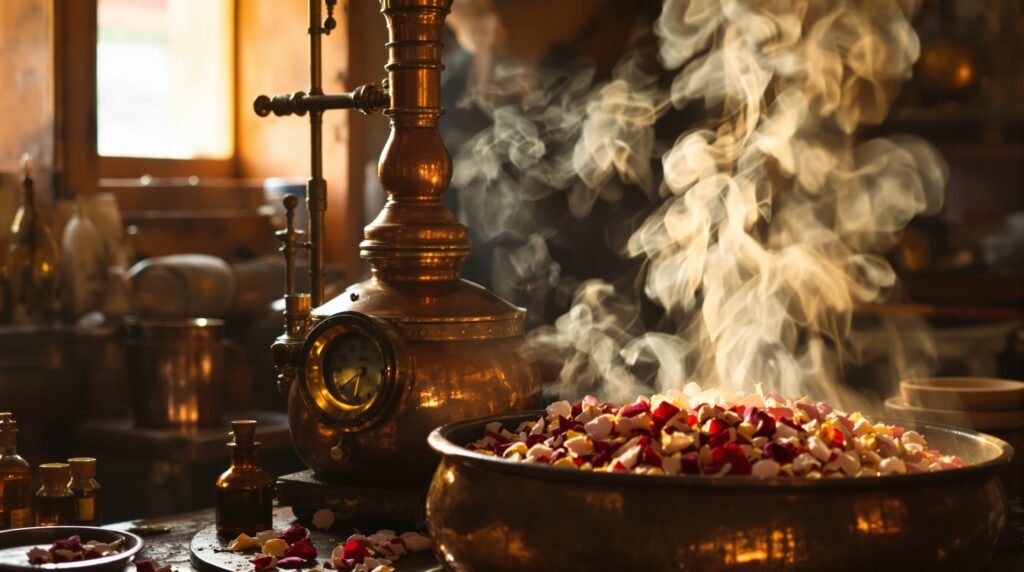
Traditional attar production is a time-honored craft that has remained largely unchanged for centuries. The process is labor-intensive and requires skill, patience, and deep knowledge of natural ingredients.
The Traditional Distillation Process
Authentic attar is made using a method called hydro-distillation, traditionally performed in copper stills. Here’s how it works:
1. Harvesting
Fresh flowers, herbs, or woods are harvested at the right time when their fragrance is strongest. For example, roses are often picked early in the morning when their essential oil content is highest.
2. Distillation
The botanical materials are placed in a copper still with water and heated. Steam carries the essential oils through a bamboo pipe into a receiving vessel filled with sandalwood oil.
3. Collection
As the steam cools, the essential oils dissolve into the sandalwood base. This creates a concentrated perfume oil that captures the pure essence of the botanical source.
4. Aging
The attar is aged in traditional containers for weeks or months, allowing the fragrance to mature and develop complexity.
This traditional method produces incredibly concentrated oils. For example, making one kilogram of rose attar requires approximately 3,000 kilograms of rose petals. This explains why authentic attar is precious and why a small bottle can last for months.
Why Attar Is Alcohol-Free
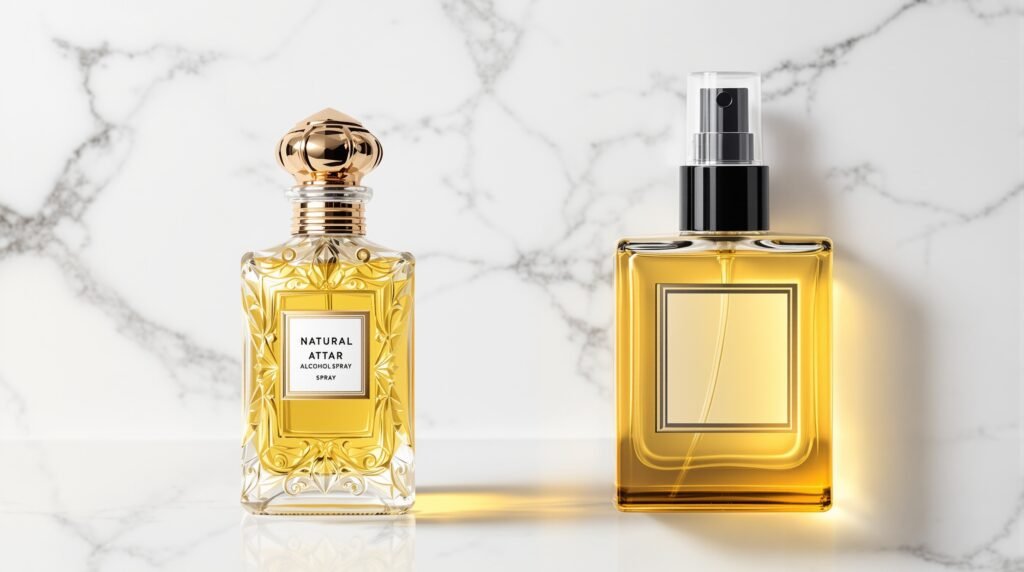
The most important characteristic of authentic attar is that it contains zero alcohol. This is not just a feature—it’s fundamental to what attar is.
Modern perfumes typically contain 70-90% alcohol, which serves as a carrier to disperse the fragrance. When you spray perfume, the alcohol evaporates quickly, leaving behind the scent. However, this also means the fragrance fades faster.
Attar takes a different approach. Instead of alcohol, it uses natural oils (usually sandalwood oil) as the base. This oil-based formula means:
- Longer lasting: Without alcohol evaporation, the fragrance stays on your skin for 8-12 hours or more
- Gentler on skin: No drying effect or irritation from alcohol
- Suitable for religious use: Acceptable for those who avoid alcohol for personal or religious reasons
- More concentrated: You need only a drop or two per application
This alcohol-free nature is why attar is often called “non-alcoholic perfume oil” or “alcohol-free perfume” in English. For many users, especially in India and the Middle East, this characteristic is essential.
Attar vs Perfume: Key Differences
While both attar and modern perfume serve the same purpose—making you smell good—they’re quite different in composition and experience.
| ASPECT | ATTAR | REGULAR PERFUME |
| Base | Natural oil (sandalwood) | Alcohol (70-90%) |
| Ingredients | 100% natural botanicals | Often synthetic fragrances |
| Application | Dabbed on pulse points | Sprayed on body/clothes |
| Longevity | 8-12+ hours | 4-6 hours |
| Skin Impact | Gentle, moisturizing | Can dry or irritate |
For a detailed comparison of attar and perfume, including which one might be better for your needs, read our complete guide: Attar vs Perfume.
Types of Attar
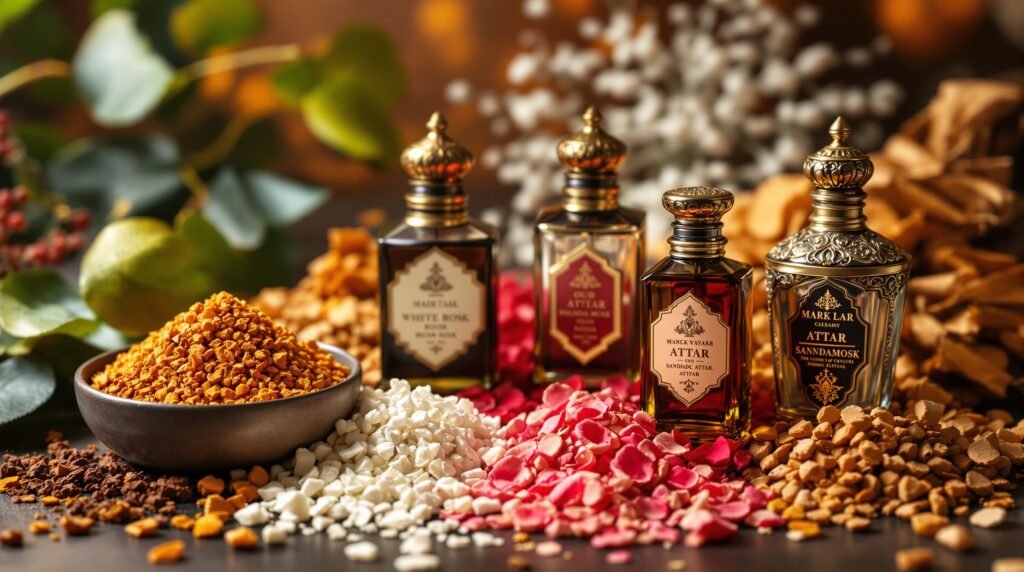
Attar can be made from virtually any fragrant botanical source. Over centuries, certain types have become particularly popular due to their distinctive scents and cultural significance.
Beyond these popular types, attar can be made from jasmine, lotus, amber, vetiver, and many other natural sources. Each has its own character and appeal. Explore all attar scent families in our Scents Guide.
Why Attar Is Popular in India and Globally
Attar has deep roots in Indian culture, particularly in cities like Kannauj, which has been producing attar for over 400 years. The tradition of wearing attar is woven into Indian weddings, festivals, and daily life.
In India
India remains one of the world’s largest producers and consumers of attar. The craft is passed down through generations, with master perfumers (known as “attarwalas”) maintaining centuries-old recipes and techniques. Cities like Kannauj, Jaipur, and Hyderabad are famous for their attar markets.
For many Indians, attar is preferred over alcohol-based perfumes because it’s natural, long-lasting, and culturally familiar. It’s also more affordable in the long run since you need very little per application.
Growing Global Interest
In recent years, attar has gained popularity worldwide. People in the USA, UK, Europe, and other regions are discovering attar as they seek:
- Natural alternatives to synthetic fragrances
- Alcohol-free options for sensitive skin
- Unique, personal fragrances that aren’t mass-produced
- Sustainable, traditional craftsmanship
- Connection to cultural heritage and history
Is Attar Halal?
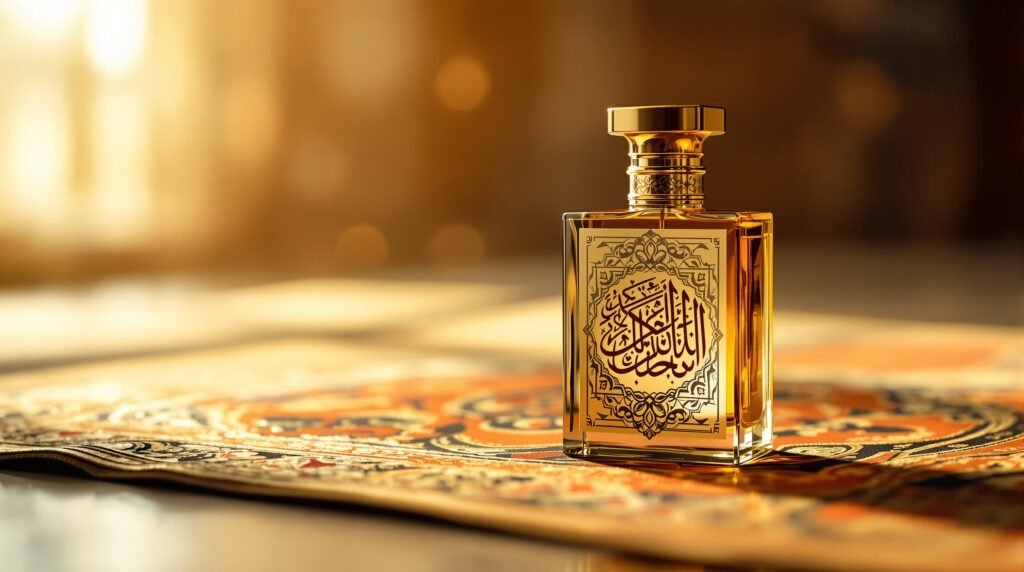
One common question about attar is whether it’s halal (permissible in Islam). The answer is generally yes, but it depends on the specific product.
Authentic attar is halal because it contains no alcohol and is made entirely from natural botanical sources. This makes it suitable for Muslims who wish to avoid alcohol-based perfumes.
However, not all products labeled “attar” are truly alcohol-free. Some modern versions may contain synthetic ingredients or alcohol. If halal compliance is important to you, look for:
- Products explicitly labeled as alcohol-free
- Traditional attar from reputable sources
- Oil-based consistency (not watery or spray-based)
- Halal certification when available
For a detailed discussion of halal attar, including how to verify authenticity and Islamic perspectives on fragrance, read our complete guide: Halal Attar Guide.
Who Should Use Attar?
Attar is suitable for a wide range of people, regardless of age, gender, or background. Here are some groups who particularly benefit from using attar:
People with Sensitive Skin
If alcohol-based perfumes cause irritation, dryness, or redness, attar is an excellent alternative. The natural oil base is gentle and can even be moisturizing.
Office and Professional Settings
Attar’s subtle, close-to-skin projection makes it ideal for workplaces. It won’t overwhelm colleagues in meetings or closed spaces, yet you’ll still smell pleasant throughout the day.
Those Seeking Natural Products
If you prefer natural, chemical-free personal care products, authentic attar fits perfectly into a natural lifestyle. It contains no synthetic fragrances, phthalates, or parabens.
Religious and Cultural Use
Many Muslims prefer attar for daily wear and special occasions like Friday prayers. It’s also used in Hindu religious ceremonies and by people of various faiths who appreciate traditional fragrances.
Fragrance Enthusiasts
If you love exploring unique scents, attar offers a world of natural fragrances that smell different from mainstream perfumes. Each attar has character and depth that develops over time on your skin.
Budget-Conscious Users
While premium attar can be expensive, a small bottle lasts much longer than regular perfume. You need only 1-2 drops per application, making it economical in the long run.
Frequently Asked Questions
Ready to Explore Attar?
Discover our complete guides to finding the perfect alcohol-free perfume oil