A scientific exploration of attar longevity, oxidation processes, aging versus spoilage, and what users should realistically expect from their perfume oils over time.
The question of whether attar expires is one of the most frequently asked—and most misunderstood—topics in the world of traditional perfume oils. Unlike commercial alcohol-based perfumes that often carry clear expiration dates, attars exist in a gray area where aging, transformation, and degradation can all occur simultaneously.
Some sellers claim that attar “never expires” and only improves with age, like fine wine. Others warn that natural oils inevitably degrade and should be used within months. The truth, as with most aspects of traditional attar, lies somewhere in between—and depends heavily on composition, storage, and realistic expectations.
This confusion stems from several factors: the natural variability of botanical materials, differences between natural and synthetic compositions, marketing claims that oversimplify complex chemistry, and the fact that “expiration” itself is poorly defined for perfume oils. Understanding attar shelf life requires distinguishing between beneficial aging, neutral transformation, and actual spoilage.
This guide examines the science of attar longevity, explains what changes to expect over time, identifies signs of degradation, and provides practical storage guidance—all without commercial bias or product promotion.
What Shelf Life Means for Attar Oils
The term “shelf life” typically refers to the period during which a product maintains its intended quality, safety, and performance characteristics. For attar oils, this definition becomes complicated because these products can undergo multiple types of change—some desirable, some neutral, and some detrimental.
Expiration vs Transformation
Unlike food or medicine, attar doesn’t suddenly become “unsafe” after a certain date. Instead, it undergoes gradual chemical changes that affect its olfactory character. Some of these changes are considered improvements—particularly in resinous or woody attars that benefit from oxidation. Others represent degradation, especially in delicate floral compositions.
The concept of “expiration” for attar is therefore more accurately described as a point at which the scent profile has changed significantly from its original character, or when unpleasant notes have developed that make the oil less desirable to use.
Natural Oil Behavior
Natural attar oils are complex mixtures of volatile and semi-volatile organic compounds. These compounds interact with oxygen, light, heat, and each other over time. The rate and nature of these interactions depend on the specific chemical composition of the attar.
Terpenes, aldehydes, esters, and other aromatic molecules each have different stability profiles. Some are highly reactive and change quickly; others remain stable for years. The overall shelf life of an attar reflects the behavior of its most vulnerable components.
Understanding shelf life for attar requires accepting that these oils are living products that evolve rather than static formulations that simply degrade. The goal is not to prevent all change—which is impossible with natural materials—but to slow undesirable changes while allowing beneficial maturation to occur.

Factors That Affect How Long Attar Lasts
The shelf life of any particular attar is determined by multiple interacting factors. Understanding these variables helps explain why some attars remain stable for decades while others show signs of degradation within months.
Raw Materials
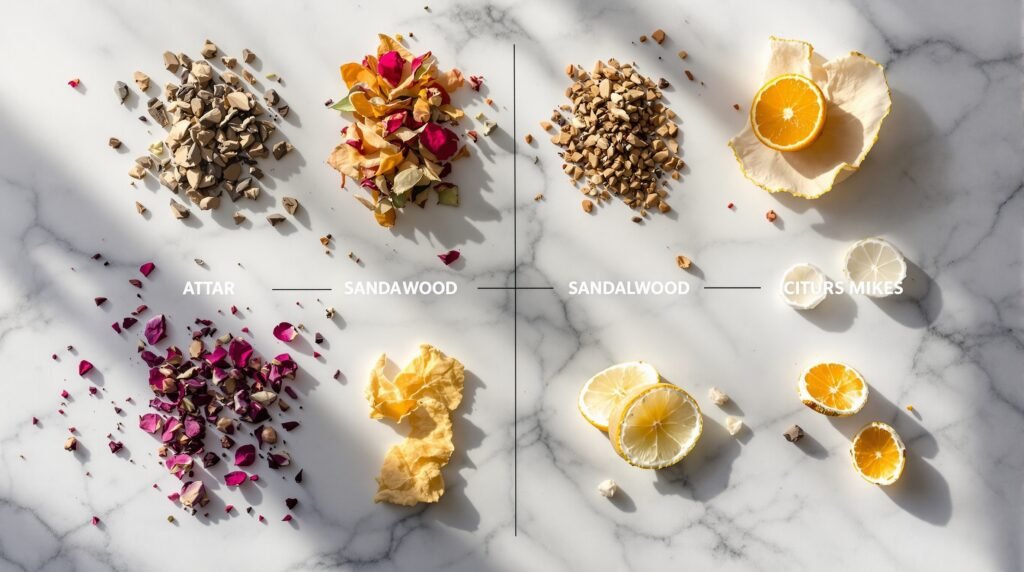
The botanical source material fundamentally determines stability. Resinous materials like oud and frankincense contain compounds that are relatively stable and may even improve with controlled oxidation. These attars can last for many years—sometimes decades—when properly stored.
Floral attars, particularly those from delicate flowers like jasmine or tuberose, contain more volatile and reactive compounds. These tend to have shorter optimal shelf lives, typically ranging from two to five years before noticeable changes occur.
Citrus-based attars are among the most vulnerable, as the terpenes and aldehydes that create their fresh character are highly susceptible to oxidation. These may show changes within one to two years, even under good storage conditions.
Base Oil Quality
Traditional attars use sandalwood oil as a carrier base, which itself is remarkably stable and acts as a natural preservative. High-quality sandalwood oil contains sesquiterpenes that resist oxidation and help protect more volatile aromatic compounds dissolved within it.
Attars made with alternative carriers—such as jojoba oil, fractionated coconut oil, or synthetic bases—may have different stability profiles. Some modern carriers offer excellent stability; others may be more prone to rancidity or chemical changes that affect the overall scent profile.
Distillation Quality
The distillation process itself affects longevity. Properly conducted traditional distillation at controlled temperatures preserves the full spectrum of aromatic compounds while minimizing the formation of unstable byproducts.
Rushed or poorly controlled distillation can create attars with imbalanced compositions that are more prone to rapid change. The presence of water residue, plant material particles, or other contaminants can also accelerate degradation.
Oxidation and Aging Explained
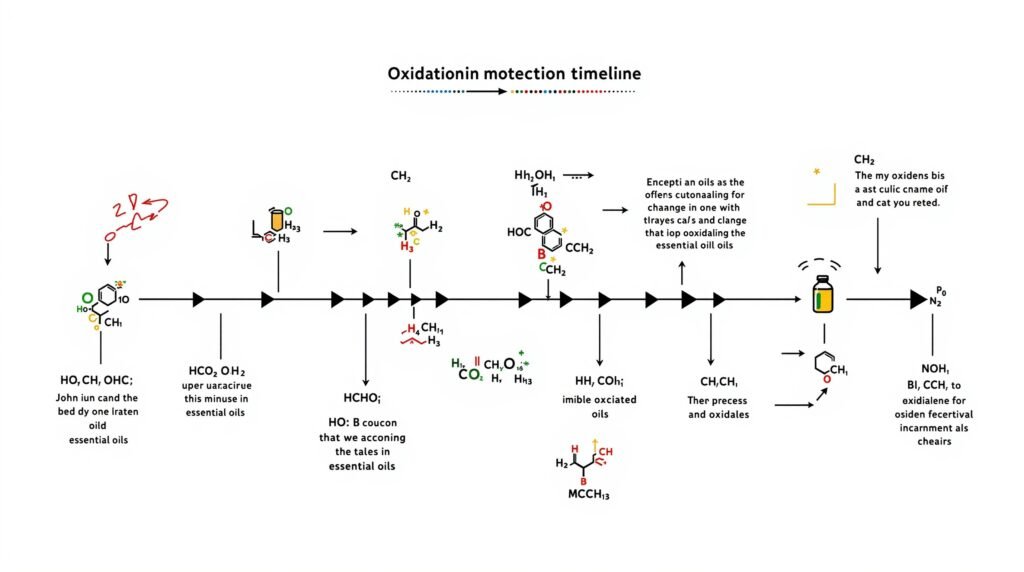
Oxidation is the primary chemical process that affects attar over time. Understanding how oxidation works—and distinguishing between beneficial and detrimental oxidation—is key to understanding attar shelf life.
Oxygen Exposure
When attar is exposed to air, oxygen molecules interact with the aromatic compounds in the oil. This can lead to several types of chemical changes: the formation of new aromatic compounds through oxidation reactions, the breakdown of existing molecules into smaller fragments, and the polymerization of molecules into larger, less volatile compounds.
In some cases, controlled oxidation improves the scent profile. Oud attars, for example, often develop richer, more complex notes as certain compounds oxidize. In other cases—particularly with delicate florals—oxidation leads to the loss of fresh top notes and the development of stale or flat characteristics.
Heat Acceleration
Temperature dramatically affects the rate of chemical reactions. For every 10°C increase in temperature, reaction rates typically double or triple. This means that attar stored at 30°C will age roughly four times faster than attar stored at 10°C.
Heat also increases the volatility of aromatic compounds, causing them to evaporate more quickly if the container is not perfectly sealed. This can lead to changes in the scent profile as lighter, more volatile notes disappear faster than heavier base notes.
Light-Induced Degradation
Ultraviolet and visible light can trigger photochemical reactions that break down aromatic molecules. This is why traditional attar is stored in dark glass bottles—typically amber or cobalt blue—that filter out harmful wavelengths.
Light-induced degradation is particularly problematic for attars containing aldehydes and certain terpenes. These compounds can undergo rapid transformation when exposed to direct sunlight, leading to off-notes and loss of characteristic scent.
The key to managing oxidation is not to prevent it entirely—which is impossible—but to control its rate and nature. Proper storage minimizes exposure to oxygen, heat, and light, allowing beneficial aging to occur while preventing rapid degradation.
How Attar Changes Over Time
As attar ages, several observable changes occur. Understanding these changes helps users distinguish between normal aging and problematic degradation.
Color Changes
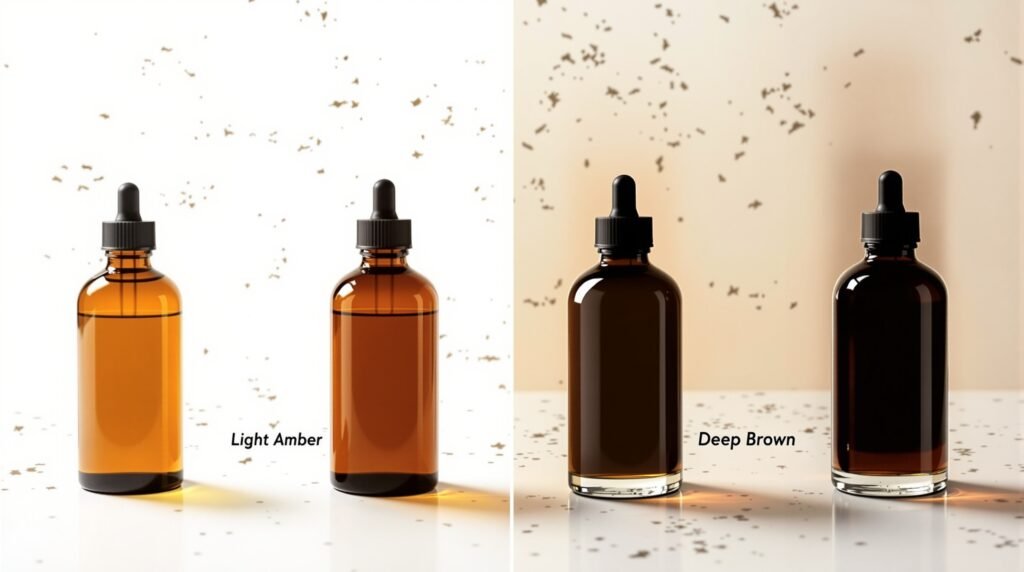
Most attars darken with age. This is a normal consequence of oxidation and does not necessarily indicate degradation. Light-colored attars may develop amber or golden tones; darker attars may become deeper brown or even nearly black.
The rate of color change varies by composition. Oud attars may darken significantly within the first year and then stabilize. Floral attars typically change color more slowly. Dramatic color changes—such as the development of green or gray tones—may indicate contamination or unusual degradation.
Texture Evolution
The viscosity of attar can change over time. Some attars become slightly thicker as lighter components evaporate and heavier molecules remain. Others may become thinner if the base oil undergoes chemical changes.
The development of sediment or cloudiness is not uncommon, especially in traditionally made attars that contain natural waxes and plant compounds. This is generally harmless and can be addressed by gentle warming or simply accepting it as part of the natural character.
Scent Evolution
The most significant changes occur in the scent profile itself. Fresh, bright top notes tend to fade first, as these are composed of the most volatile and reactive compounds. Middle notes may become more prominent or shift in character. Base notes typically remain most stable but can develop new nuances.
In well-made attars with stable compositions, these changes can be subtle and even desirable. The scent may become smoother, more integrated, and more complex. In poorly stored or inherently unstable attars, the changes may be more dramatic and less pleasant.
The overall projection and longevity may also change. Some aged attars become more concentrated as volatile components evaporate, leading to stronger performance. Others may lose intensity as key aromatic compounds degrade.
Natural vs Synthetic Attars and Shelf Life
The distinction between natural and synthetic attars has significant implications for shelf life and aging behavior.
Natural Attar Stability
Natural attars contain hundreds of different compounds in complex ratios. This complexity means that aging affects different components at different rates, leading to gradual evolution rather than sudden change. The presence of natural antioxidants in some botanical materials can provide some protection against degradation.
However, natural attars are also more variable. Two batches of the same attar may age differently depending on subtle differences in composition, harvest conditions, and distillation parameters. This variability is part of the character of natural products but makes it difficult to predict exact shelf life.
Synthetic Attar Stability
Synthetic attars or those containing synthetic components often have more predictable shelf lives. Individual aroma chemicals can be selected for stability, and formulations can be designed to resist oxidation and other forms of degradation.
Many synthetic musks, for example, are extremely stable and can last for many years without significant change. Synthetic woody notes and amber bases also tend to be quite stable. However, some synthetic compounds—particularly certain aldehydes and esters—can be just as vulnerable to degradation as their natural counterparts.
Aging Expectations
Natural attars are more likely to undergo beneficial aging, particularly those based on resinous or woody materials. The complex interactions between natural compounds can create new aromatic nuances that are valued by enthusiasts.
Synthetic attars typically remain more stable but are less likely to develop interesting aged characteristics. They tend to either stay relatively unchanged or degrade without the intermediate stages of interesting evolution that natural attars may exhibit.
| Aspect | Natural Attar | Synthetic Attar |
|---|---|---|
| Typical Shelf Life | 2-10 years (varies widely) | 3-7 years (more consistent) |
| Aging Character | Complex evolution, may improve | Stable or gradual decline |
| Color Change | Significant darkening common | Minimal to moderate change |
| Oxidation Sensitivity | Variable, depends on composition | Generally lower, more predictable |
| Batch Variation | High, each batch unique | Low, consistent formulation |
| Storage Requirements | More critical, needs care | More forgiving, stable |
Signs an Attar Has Degraded
While some changes are normal and even desirable, certain signs indicate that an attar has degraded beyond its useful life. Recognizing these signs helps users make informed decisions about whether to continue using an aged attar.
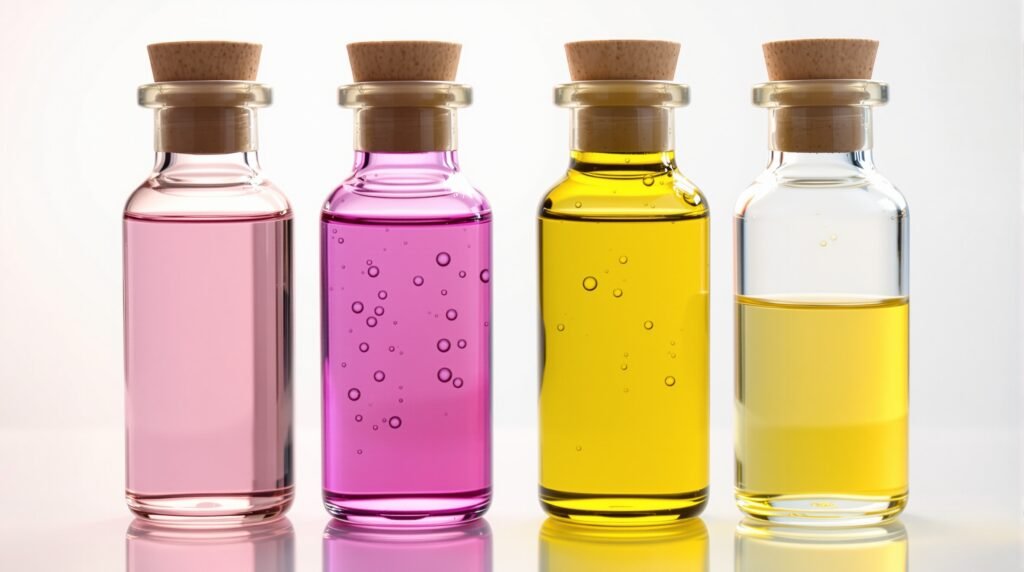
Rancid or Off Notes
The most obvious sign of degradation is the development of unpleasant odors. Rancid notes—often described as fatty, stale, or reminiscent of old cooking oil—indicate that the base oil or certain aromatic compounds have oxidized excessively.
Other off-notes may include sharp, acrid smells, musty or moldy odors (suggesting contamination), or a flat, lifeless character where the scent has lost all complexity and vibrancy. These are clear indicators that the attar is past its prime.
Unusual Separation
While some natural settling is normal, dramatic separation—where the oil clearly divides into distinct layers that don’t remix when shaken—may indicate chemical breakdown or contamination.
The appearance of crystals, thick sediment, or a waxy layer on top of the oil can also signal degradation, though in some cases these may simply be natural waxes precipitating out due to temperature changes.
Sharp or Flat Smell
Degraded attars often lose their complexity and balance. The scent may become one-dimensional, with all the nuanced middle and top notes gone, leaving only a heavy, monotonous base. Alternatively, the scent may become sharp and harsh as certain compounds oxidize into more aggressive molecules.
A complete loss of projection—where the attar barely smells even when applied generously—can also indicate that the volatile aromatic compounds have evaporated or degraded, leaving only inert base oil.
Proper Storage and Its Impact on Longevity
Storage conditions are perhaps the single most important factor in determining how long an attar maintains its quality. Proper storage can extend shelf life significantly, while poor storage can cause rapid degradation even in inherently stable compositions.
Bottle Material
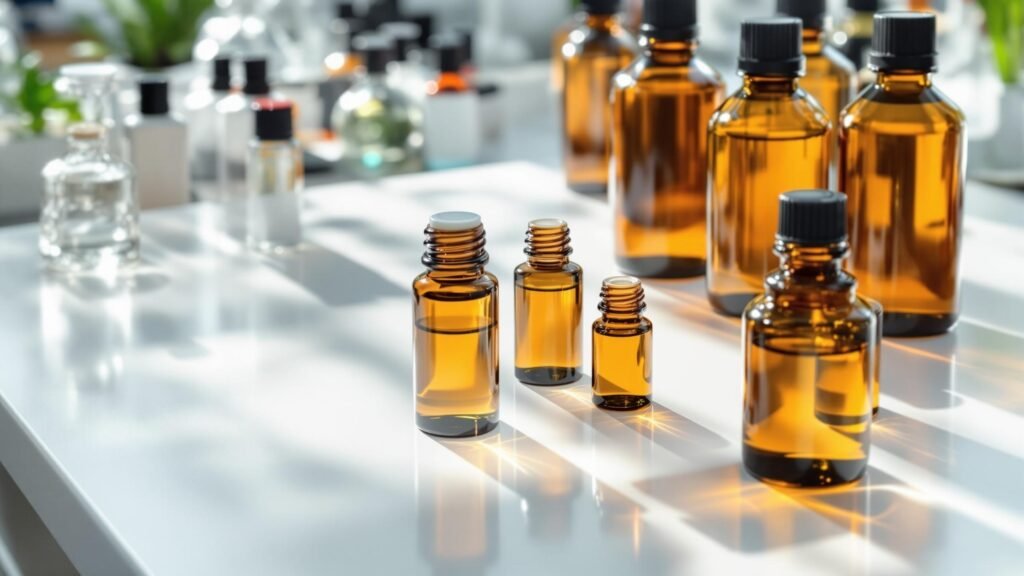
Dark glass bottles—particularly amber or cobalt blue—are essential for protecting attar from light-induced degradation. These colored glasses filter out ultraviolet and much of the visible light spectrum that can trigger photochemical reactions.
Clear glass offers no protection and should be avoided for long-term storage. Plastic bottles are generally unsuitable for attar storage, as many aromatic compounds can interact with plastic materials, leading to contamination or loss of scent.
The bottle should have a tight-sealing cap to minimize air exposure. Roll-on bottles, while convenient for application, may allow more air contact than traditional dropper bottles with secure caps.
Environmental Conditions
Temperature stability is crucial. Attar should be stored in a cool location, ideally between 15-20°C. Avoid areas subject to temperature fluctuations, such as bathrooms or near windows. Refrigeration is generally unnecessary and may cause some attars to become cloudy or develop sediment, though this is usually reversible.
Humidity is less critical for oil-based attars than for alcohol-based perfumes, but extremely humid environments may promote mold growth if any water contamination is present. A dry, stable environment is ideal.
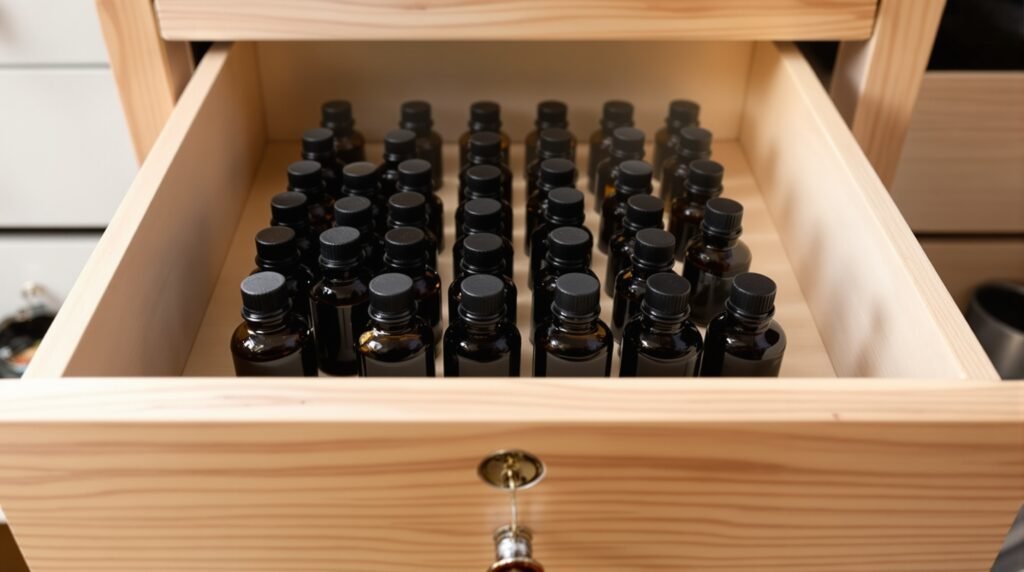
Light exposure should be minimized. Store attar in a dark cabinet or drawer, away from direct sunlight and bright artificial light. Even brief exposure to strong light can initiate degradation processes.
Handling Habits
Minimize air exposure by keeping bottles tightly closed when not in use. Avoid leaving bottles open while applying attar; instead, dispense what you need and immediately reseal the bottle.
For large bottles, consider decanting smaller amounts into separate containers for daily use, keeping the main bottle sealed and stored properly. This reduces the frequency of opening the main bottle and exposing the entire contents to air.
Avoid contaminating the attar by touching the applicator or dropper to skin or other surfaces. This can introduce bacteria, oils, or other contaminants that may affect stability.
| Storage Factor | Optimal Condition | Impact on Shelf Life |
|---|---|---|
| Temperature | 15-20°C, stable | Can double or triple shelf life |
| Light Exposure | Dark storage, amber/blue glass | Prevents photochemical degradation |
| Air Exposure | Minimal, tight seals | Slows oxidation significantly |
| Humidity | Low to moderate, stable | Minor impact for oil-based attars |
| Container Material | Dark glass, inert materials | Prevents contamination and light damage |
| Handling Frequency | Minimal opening, clean application | Reduces contamination and air exposure |
Common Myths About Attar Expiration
Several persistent myths about attar shelf life circulate in both consumer and seller communities. Addressing these misconceptions helps users develop realistic expectations.
Myth: “Attar Never Expires”
This is perhaps the most common and misleading claim. While some attars can last for many years—even decades—under optimal conditions, no attar is immune to chemical change. All organic materials undergo transformation over time.
The myth likely stems from the fact that some aged attars remain pleasant and usable long after they’ve changed from their original character. This doesn’t mean they haven’t “expired” in the sense of no longer matching their original profile—it simply means the aged version is still acceptable or even preferred by some users.
Myth: “Stronger Smell Means Freshness”
Some users assume that if an attar still smells strong, it must be fresh and unaffected by time. In reality, aged attars can sometimes smell stronger than fresh ones, particularly if volatile top notes have evaporated, leaving a more concentrated base.
Conversely, some degradation products can have strong, sharp odors that are unpleasant but intense. Strength alone is not a reliable indicator of quality or freshness—the character and balance of the scent matter more.
Myth: “Price Determines Shelf Life”
While high-quality attars often have better stability due to superior raw materials and production methods, price alone doesn’t guarantee longevity. An expensive floral attar may still have a shorter shelf life than an inexpensive oud attar simply due to the nature of the botanical materials.
Storage conditions and handling have a greater impact on actual shelf life than the original price of the attar. A well-stored budget attar may outlast a poorly stored premium one.
Myth: “All Natural Attars Age Better”
While some natural attars do develop interesting aged characteristics, not all natural attars age well. Delicate floral attars, citrus-based compositions, and attars containing highly reactive natural compounds may degrade relatively quickly.
The aging potential depends on the specific botanical materials and their chemical composition, not simply on whether the attar is natural or synthetic. Some synthetic components are actually more stable and age more gracefully than their natural counterparts.
Myth: “Refrigeration Always Extends Shelf Life”
While cool storage is beneficial, refrigeration is not always necessary or even desirable for attar. The temperature fluctuations that occur when removing and returning bottles to the refrigerator can cause condensation and temperature stress.
Additionally, very cold temperatures can cause some natural waxes and compounds to precipitate out of solution, creating cloudiness or sediment. For most attars, storage in a cool, stable room temperature environment is preferable to refrigeration.
Conclusion – Understanding Longevity Realistically
The question “Does attar expire?” has no simple yes-or-no answer. Attar undergoes continuous chemical evolution from the moment it’s created. Whether these changes constitute “expiration” depends on individual expectations, the specific composition of the attar, and how it has been stored.
Most well-made attars, when properly stored, will remain pleasant and usable for several years at minimum. Resinous and woody attars may last a decade or more, potentially improving with age. Floral and citrus attars typically have shorter optimal periods, ranging from two to five years before significant changes become apparent.
The key to maximizing attar shelf life lies in understanding the factors that drive change—oxidation, heat, light, and contamination—and taking practical steps to minimize their impact. Dark glass bottles, cool stable storage, minimal air exposure, and clean handling practices can dramatically extend the useful life of any attar.
Rather than seeking a definitive expiration date, users should learn to evaluate their attars periodically. Smell them, observe their appearance, and note any changes. If the scent remains pleasant and the oil shows no signs of rancidity or contamination, the attar is still usable, regardless of its age.
Understanding attar shelf life is ultimately about developing realistic expectations and appreciating these oils as living products that evolve rather than static formulations that simply degrade. With proper care and informed observation, users can enjoy their attars for many years while recognizing when an oil has truly reached the end of its useful life.
For those interested in exploring more about attar characteristics and selection, our comprehensive guides offer additional insights into longevity factors and quality assessment.