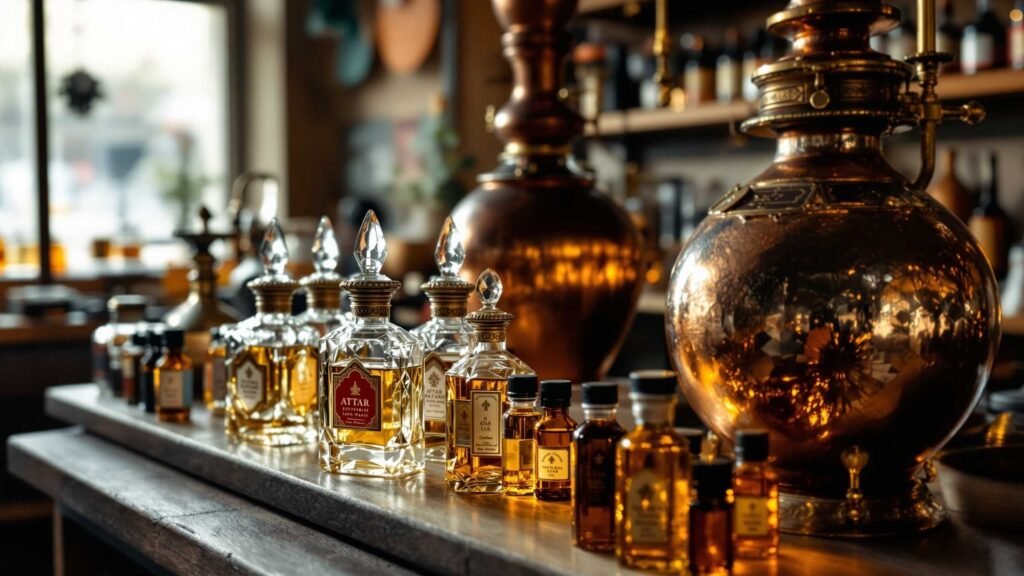
An in-depth exploration of authentic attar-producing regions worldwide, examining how geography, botany, cultural heritage, and artisanal expertise converge to create the world’s most genuine traditional perfume oils.
Authenticity in attar production encompasses far more than the absence of synthetic ingredients. True authenticity emerges from the intersection of geography, botany, cultural tradition, and artisanal technique—a complex matrix that cannot be replicated through industrial processes or transplanted to arbitrary locations. Understanding what attar is provides the foundation for appreciating why certain regions produce attars that scholars, historians, and connoisseurs recognize as definitively authentic.
Geographical authenticity in perfumery parallels similar concepts in wine, tea, and other agricultural products where terroir—the complete natural environment including climate, soil, and ecosystem—fundamentally shapes the final product. A rose grown in the volcanic soils of Persia produces essential oils chemically distinct from genetically identical roses cultivated in European greenhouses. These differences, measurable through gas chromatography and mass spectrometry, reflect the plant’s response to its specific environment: water mineral content, temperature fluctuations, soil microbiome, and countless other variables.
Beyond botanical terroir, authentic attar production requires cultural continuity—the transmission of specialized knowledge through generations of practitioners. Master distillers in traditional attar-producing regions possess empirical understanding accumulated over centuries: which flowers to harvest at dawn versus dusk, how wood fire temperature affects distillation outcomes, which copper vessels produce optimal results for specific botanicals. This tacit knowledge, rarely documented in written form, constitutes an essential component of authenticity that cannot be acquired through formal education or industrial research.
Historical continuity also defines authenticity. Regions that have produced specific attars for centuries or millennia develop not only technical expertise but also cultural frameworks that support and sustain production. Religious practices, social customs, economic structures, and aesthetic preferences all shape attar production in ways that reflect deep cultural integration. An attar produced in a region with thousand-year perfumery traditions carries authenticity that newly established production, however technically proficient, cannot claim.
This article examines the world’s most authentic attar-producing regions, analyzing the geographical, botanical, cultural, and historical factors that establish their legitimacy. By understanding these regional traditions, we gain insight into how place, culture, and craft combine to create fragrances that transcend mere scent to become expressions of cultural identity and historical continuity. For context on how traditional attar production evolved globally, see our comprehensive article on the history of attar.
Understanding Terroir in Attar Production
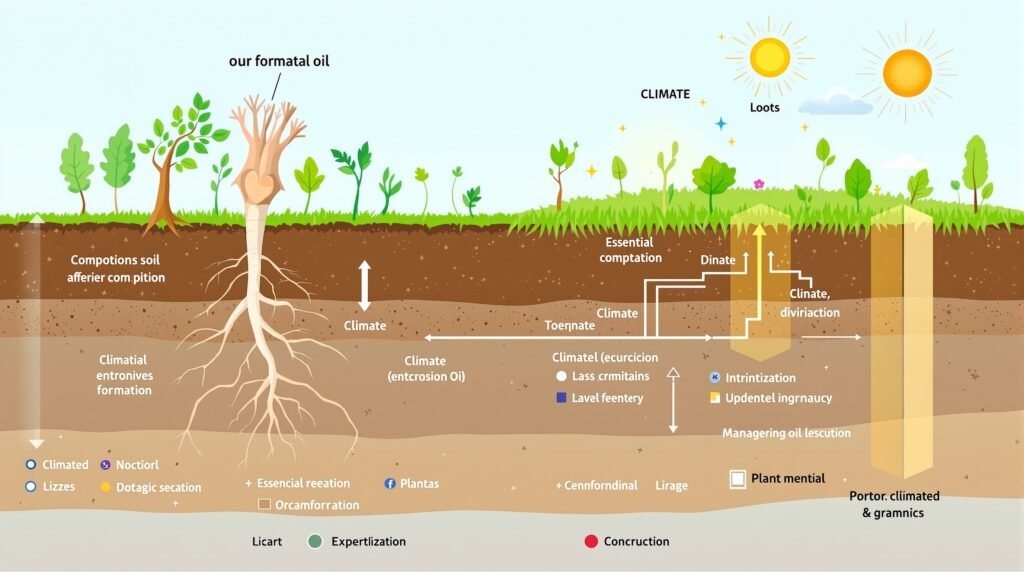
The concept of terroir, borrowed from viticulture, provides a framework for understanding why certain regions produce superior attars. Terroir encompasses all environmental factors that influence botanical growth and essential oil composition: climate patterns, soil chemistry, water sources, altitude, sunlight exposure, and the complex interactions between plants and their ecosystems.
Climate and Seasonal Variation
Climate profoundly affects essential oil production in aromatic plants. Temperature ranges, humidity levels, and seasonal patterns influence when plants flower, how much essential oil they produce, and the chemical composition of those oils. The Damask rose, for example, produces optimal essential oil yields in regions with cool nights and warm days during flowering season—conditions found in Persian highlands and certain Indian valleys but difficult to replicate elsewhere.
Seasonal timing also matters critically. Many traditional attar-producing regions have developed harvest calendars refined over centuries, specifying not just which month but which week, day, and even hour produces optimal raw materials. These calendars reflect deep understanding of how seasonal changes affect plant chemistry. Modern scientific analysis confirms these traditional observations: essential oil composition varies measurably throughout flowering periods, with peak aromatic complexity often occurring during narrow windows that traditional producers learned to identify through generations of observation.
Soil Chemistry and Mineral Content
Soil composition directly influences plant metabolism and essential oil production. Mineral availability, pH levels, organic matter content, and soil microbiome all affect how plants synthesize aromatic compounds. Sandalwood trees, crucial to traditional attar production, require specific soil fungi (mycorrhizae) for optimal growth and oil production. These fungi exist naturally in certain Indian forest soils but prove difficult to establish elsewhere, explaining why Indian sandalwood remains prized despite attempts to cultivate the species in other regions.
Water mineral content similarly affects plant chemistry. The roses of Kashan, Persia, draw water from mountain streams with distinctive mineral profiles that influence essential oil composition. Attempts to replicate Persian rose attar using roses grown with different water sources produce chemically similar but subtly different results—differences that experienced perfumers can detect and that analytical chemistry can measure.
Botanical Specificity and Endemic Species
Many authentic attars derive from plant species or varieties endemic to specific regions. Agarwood (oud), perhaps the most geographically specific attar material, comes from Aquilaria trees that grow wild only in Southeast Asian forests. While plantation cultivation has expanded to other regions, wild agarwood from traditional sources remains most prized, both for its superior aromatic complexity and its cultural authenticity.
Even widely distributed species often have regionally specific varieties that produce distinctive essential oils. The vetiver grass of South India differs genetically from vetiver grown elsewhere, producing oils with unique aromatic profiles. These regional varieties, selected and propagated over centuries, represent botanical heritage as significant as the distillation techniques used to process them.
Distillation Traditions and Technical Terroir
Beyond botanical terroir, authentic attar production involves what might be called “technical terroir”—region-specific distillation methods, equipment designs, and processing techniques that shape final products as significantly as raw materials. The copper vessels used in Kannauj differ in design from those used in Persian distilleries, affecting heat distribution and vapor flow. Wood fire types vary by region, with different woods imparting subtle influences on distillation outcomes. These technical variations, developed through centuries of regional practice, contribute to the distinctive character of authentic regional attars.
Factors Contributing to Attar Terroir
| Factor | Influence on Attar | Regional Example |
|---|---|---|
| Climate | Temperature, humidity affect oil yield and composition | Persian rose requires cool nights, warm days |
| Soil Chemistry | Minerals influence plant metabolism and aromatic compounds | Indian sandalwood requires specific soil fungi |
| Water Source | Mineral content affects plant chemistry | Kashan roses use mountain stream water |
| Endemic Species | Unique genetic varieties produce distinctive oils | Southeast Asian wild agarwood |
| Seasonal Timing | Harvest timing affects oil complexity | Dawn-harvested jasmine in India |
| Distillation Method | Equipment and technique shape final aroma | Kannauj copper deg-bhapka system |
| Cultural Knowledge | Generational expertise optimizes all factors | Family-transmitted formulas and techniques |
Indian Subcontinent
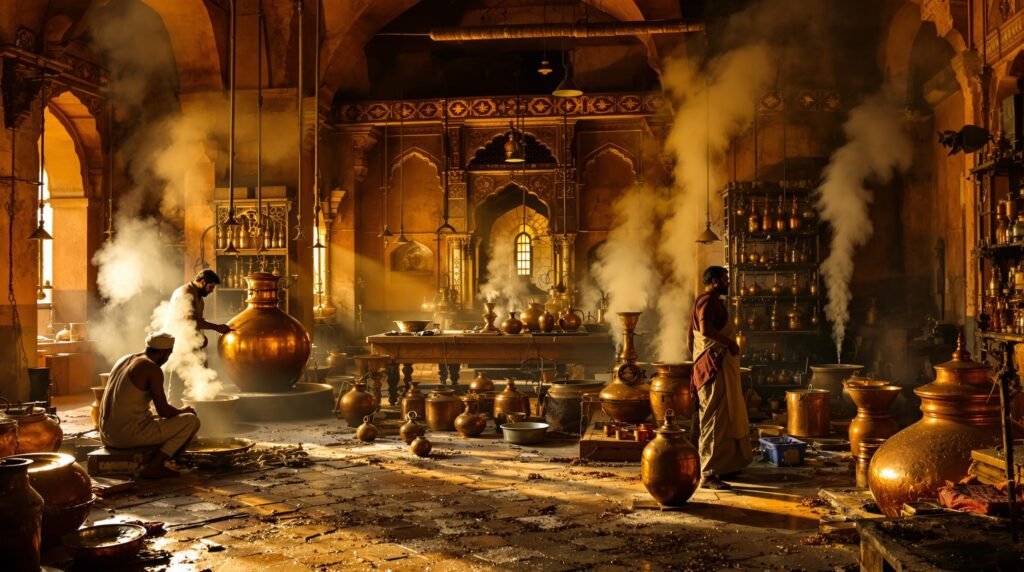
The Indian subcontinent represents perhaps the world’s most diverse and historically continuous attar-producing region, with traditions spanning over three millennia. The region’s botanical diversity, cultural emphasis on fragrance, and unbroken artisanal lineages create conditions for authentic attar production unmatched elsewhere.
Kannauj: The Perfume Capital
Kannauj, located in Uttar Pradesh along the Ganges River, has served as India’s perfume capital for over 1,000 years, making it arguably the world’s oldest continuously operating perfume production center. The city’s geographical advantages—abundant water for distillation, proximity to flower-growing regions, and strategic trade route location—combined with accumulated cultural knowledge to create an attar production center of global significance.
Kannauj’s authentic attars include gulab (rose), hina (henna flower), kewra (pandanus), and the famous mitti attar—a unique fragrance capturing the scent of first monsoon rain on parched earth. Mitti attar, produced by distilling baked clay, represents an innovation found nowhere else in world perfumery, demonstrating the creative adaptation that characterizes authentic regional traditions. The technique, developed to capture an ephemeral natural scent, requires specialized knowledge of clay selection, baking temperatures, and distillation parameters that Kannauj perfumers have refined over centuries.
The city’s most complex creation, shamama attar, exemplifies the pinnacle of Indian perfumery. This elaborate blend incorporates 30-60 ingredients including flowers, herbs, woods, and resins, requiring weeks or months of preparation. Each family of perfumers maintains proprietary shamama formulas passed through generations, with subtle variations that connoisseurs can distinguish. The creation of shamama demands not only technical skill but also aesthetic judgment developed through years of apprenticeship—knowledge that cannot be codified in written recipes.
Regional Specializations Across India
Beyond Kannauj, various Indian regions have developed distinctive attar specializations based on local flora and cultural preferences. Tamil Nadu and Karnataka in South India specialize in sandalwood attar, leveraging the region’s native Santalum album forests. Indian sandalwood, particularly from Mysore, produces essential oil considered superior to sandalwood from other regions due to higher santalol content and more complex aromatic profile.
Bengal developed expertise in jasmine and tuberose attars, utilizing the region’s abundant flower cultivation. The humid climate and alluvial soils of the Ganges delta produce flowers with exceptional aromatic intensity. Bengali perfumers developed specialized techniques for processing these delicate flowers, which lose aromatic compounds rapidly after harvest. The speed and precision required for optimal extraction represent regional expertise refined over generations.
Kashmir, in India’s northern mountains, produces saffron-infused attars utilizing the precious spice grown in high-altitude valleys. Kashmiri saffron, recognized globally for its quality, imparts distinctive character to attars that cannot be replicated with saffron from other regions. The combination of rare botanical material and specialized processing techniques creates attars of exceptional value and authenticity.
Cultural Integration and Religious Significance
Indian attar production integrates deeply with religious and cultural practices, creating social frameworks that support and sustain traditional production. Hindu temple worship incorporates specific attars as offerings to deities, while Islamic traditions in India emphasize perfume use following prophetic example. This religious significance creates stable demand that transcends fashion trends, providing economic foundation for continued artisanal production. The cultural embeddedness of attar in Indian society represents a form of authenticity as significant as geographical or botanical factors.
Authentic Indian Attars by Region
| Region | Signature Attars | Key Botanical Sources | Distinctive Characteristics |
|---|---|---|---|
| Kannauj (Uttar Pradesh) | Gulab, shamama, mitti, hina, kewra | Rose, henna, pandanus, baked earth | Complex blends; unique mitti attar; 1000+ year tradition |
| Karnataka/Tamil Nadu | Sandalwood, vetiver | Santalum album, Vetiveria zizanioides | Mysore sandalwood; highest santalol content globally |
| Bengal (West Bengal) | Jasmine, tuberose, champaca | Jasminum sambac, Polianthes tuberosa | Delicate floral processing; humid climate advantage |
| Kashmir | Saffron-infused attars | Crocus sativus (saffron) | High-altitude cultivation; world’s finest saffron |
| Assam | Agarwood (oud), nagarmotha | Aquilaria malaccensis, Cyperus scariosus | Wild agarwood forests; traditional tribal knowledge |
Arabian Peninsula
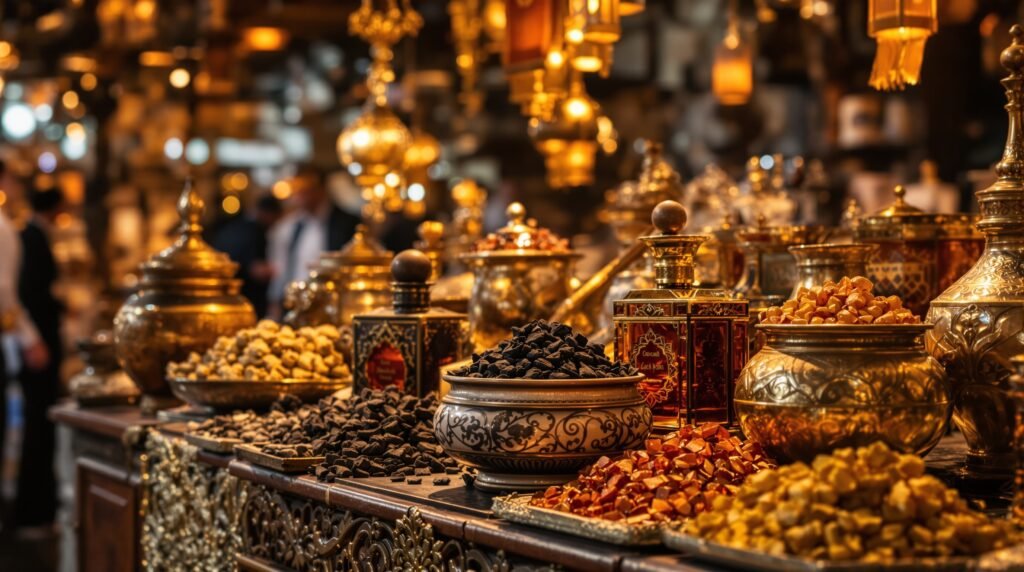
The Arabian Peninsula, while not a primary source of aromatic botanicals, developed distinctive attar traditions centered on trade, blending expertise, and cultural preferences for bold, long-lasting fragrances. Arabian perfumery authenticity derives less from botanical terroir than from centuries of accumulated blending knowledge and cultural integration of specific aromatic materials.
Oud: The Heart of Arabian Perfumery
Oud (agarwood) occupies a central position in Arabian perfumery culture, despite agarwood trees growing primarily in Southeast Asia rather than Arabia. Arabian merchants controlled much of the historical oud trade, and Arabian perfumers developed unparalleled expertise in processing, grading, and blending oud oils. This commercial and technical dominance established Arabia as the authentic center of oud perfumery, even though the raw material originates elsewhere.
Arabian oud traditions emphasize complex processing techniques that transform raw agarwood into refined attars. These include aging oud oil for years to mellow harsh notes, blending different oud grades to achieve balanced profiles, and combining oud with complementary materials like rose, amber, and musk. The resulting “mukhallat” (blended) attars represent distinctively Arabian creations that differ significantly from the pure oud oils of Southeast Asia.
Amber and Musk Traditions
Arabian perfumery developed sophisticated traditions around amber (a complex blend of ingredients rather than a single material) and musk. Arabian amber formulations typically combine ambergris, labdanum, benzoin, and vanilla-like materials to create warm, sweet, resinous bases. These amber blends, refined over centuries, represent authentic Arabian contributions to perfumery that reflect regional aesthetic preferences for rich, enveloping fragrances.
Musk, historically derived from musk deer, played a crucial role in Arabian perfumery. While natural musk is now largely unavailable due to conservation concerns, traditional Arabian musk-based formulations influenced perfumery globally. Contemporary Arabian perfumers maintain these traditions using plant-based and synthetic musk alternatives, preserving blending philosophies even as materials change.
Regional Variations Within Arabia
Different Arabian regions developed distinctive perfumery preferences and specializations. Oman became known for frankincense-based attars, leveraging the country’s native Boswellia trees that produce the world’s finest frankincense. Omani frankincense, particularly from the Dhofar region, possesses aromatic complexity superior to frankincense from other regions, creating authentic Omani attars that cannot be replicated elsewhere.
Yemen historically specialized in complex incense blends and attars incorporating local botanicals like myrrh and various aromatic resins. Saudi Arabia, particularly the Hijaz region, developed perfumery traditions closely tied to Islamic religious practices, with specific attars associated with pilgrimage and religious observance. These regional variations, while sharing common Arabian aesthetic principles, demonstrate how local culture and available materials shape authentic traditions within broader regional frameworks.
Authentic Arabian Attar Traditions
| Attar Type | Primary Materials | Regional Specialty | Cultural Significance |
|---|---|---|---|
| Oud Mukhallat | Agarwood, rose, amber, musk | UAE, Saudi Arabia | Luxury, hospitality, religious observance |
| Arabian Amber | Ambergris, labdanum, benzoin, vanilla | Gulf states | Warmth, sensuality, traditional identity |
| Frankincense Attar | Boswellia sacra resin | Oman (Dhofar) | Religious ceremonies, meditation, purification |
| Musk-based Blends | Musk (traditional/modern), florals, woods | Saudi Arabia | Following prophetic tradition; Friday prayer |
| Rose-Oud Blends | Taif rose, aged oud | Saudi Arabia (Taif) | Balance of floral and woody; celebration |
Persia and Central Asia
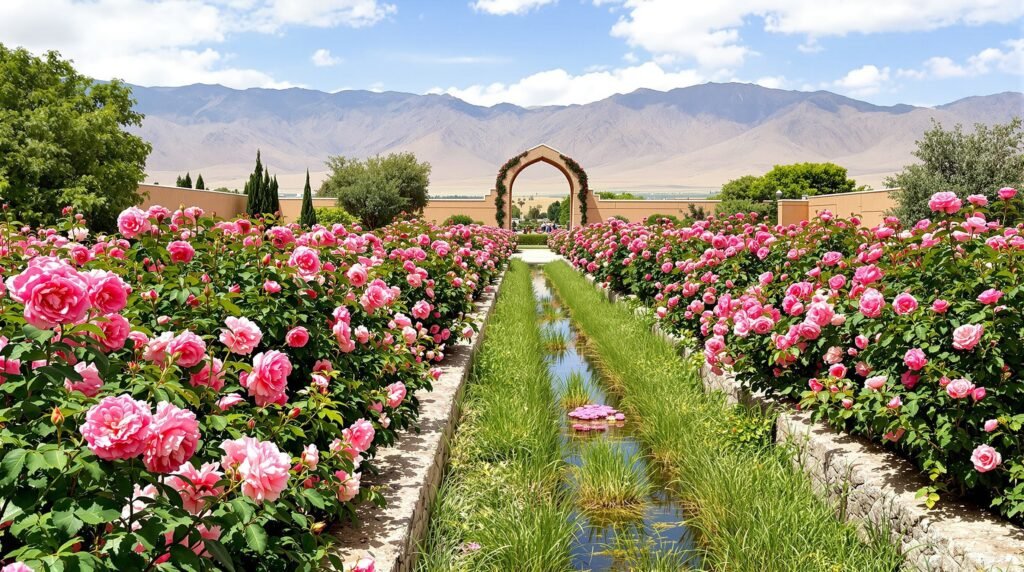
Persia (modern Iran) and Central Asia developed perfumery traditions that profoundly influenced global attar production. The region’s contributions to distillation science, rose cultivation, and aesthetic philosophy established standards that persist in contemporary practice. Persian authenticity derives from the combination of ideal rose-growing terroir, centuries of technical refinement, and deep cultural integration of perfumery into art, literature, and daily life.
Persian Rose: The Gold Standard
Persian rose attar, particularly from Kashan, Isfahan, and Shiraz, represents perhaps the world’s most celebrated floral attar. The Damask rose (Rosa damascena), believed to have originated in Persia, achieves optimal aromatic complexity in Persian highland valleys where cool nights, warm days, and mineral-rich mountain water create ideal growing conditions. Chemical analysis reveals that Persian rose oil contains higher concentrations of certain aromatic compounds, particularly phenylethyl alcohol and citronellol, compared to roses grown elsewhere.
Persian rose cultivation and distillation follow protocols refined over millennia. Roses are harvested at dawn when essential oil content peaks, immediately transported to distilleries, and processed within hours to preserve volatile compounds. The distillation process, conducted in traditional copper alembics over carefully controlled fires, requires expert judgment to achieve optimal extraction without degrading delicate aromatic molecules. Master distillers can distinguish subtle quality variations based on rose variety, harvest timing, and distillation parameters—knowledge accumulated through generations of practice.
Central Asian Floral Traditions
Central Asian regions, particularly Uzbekistan and Tajikistan, developed distinctive floral attar traditions influenced by Persian techniques but adapted to local botanicals and cultural preferences. The ancient cities of Bukhara and Samarkand, positioned along Silk Road trade routes, became centers of perfumery that synthesized Persian, Indian, and Chinese aromatic knowledge.
Central Asian perfumers specialized in attars from regional flowers including iris, narcissus, and various wild mountain flowers unavailable elsewhere. These attars, less known internationally than Persian rose or Indian sandalwood, represent authentic regional traditions with distinctive aromatic profiles. The relative obscurity of Central Asian attars reflects historical isolation rather than inferior quality—many represent sophisticated perfumery achievements deserving wider recognition.
Cultural and Literary Significance
Persian perfumery’s authenticity extends beyond technical excellence to encompass profound cultural integration. Persian poetry, from Hafez to Rumi, frequently references roses and perfume, elevating fragrance to symbolic status representing beauty, divine love, and spiritual transcendence. This literary tradition created cultural frameworks that valued perfumery as art rather than mere craft, supporting the development of sophisticated aesthetic standards.
Persian miniature paintings often depict rose gardens and perfume preparation, documenting historical practices while demonstrating perfumery’s importance in visual arts. Persian carpets incorporate stylized floral motifs that reference aromatic gardens. This multimedia cultural presence—spanning literature, visual arts, and material culture—demonstrates how deeply perfumery integrated into Persian civilization, creating authenticity that transcends technical production to encompass entire cultural worldviews.
Southeast Asia

Southeast Asia represents the primary source region for agarwood (oud), one of perfumery’s most valuable and culturally significant materials. The region’s tropical rainforests provide the only natural habitat for Aquilaria species that produce agarwood, establishing Southeast Asia as the authentic origin of this precious aromatic material. Beyond agarwood, the region’s exceptional botanical diversity supports numerous other aromatic traditions.
Agarwood: Geography and Authenticity
Agarwood forms when Aquilaria trees, native to Southeast Asian rainforests, become infected with specific mold species (Phialophora parasitica and related fungi). The tree responds by producing dark, resinous heartwood saturated with complex aromatic compounds. This process occurs naturally only in specific forest ecosystems with the right combination of tree species, fungal populations, climate, and environmental stressors. Attempts to replicate agarwood formation in other regions have achieved limited success, with plantation-grown agarwood generally considered inferior to wild forest material.
Different Southeast Asian regions produce agarwood with distinctive aromatic profiles. Vietnamese agarwood, particularly from the Khanh Hoa region, is prized for sweet, complex notes. Cambodian agarwood tends toward darker, more resinous character. Indonesian agarwood from various islands shows remarkable diversity, with each island producing subtly different profiles. These regional variations reflect differences in Aquilaria species, fungal strains, soil chemistry, and climate—demonstrating how terroir affects even wood-based aromatics.
Traditional Harvesting and Processing
Indigenous communities in Southeast Asian forests developed sophisticated knowledge of agarwood identification, harvesting, and processing over centuries. Traditional harvesters can identify infected trees through subtle visual cues, assess resin quality by examining wood color and density, and select optimal material for different uses. This expertise, transmitted through generations, represents cultural knowledge as valuable as the agarwood itself.
Processing techniques vary by region and intended use. Some traditions emphasize aging agarwood for years before distillation, believing this enhances aromatic complexity. Others employ specific distillation temperatures and durations to achieve desired aromatic profiles. These processing variations, developed through centuries of experimentation, create regional styles that connoisseurs can distinguish—further evidence of how cultural knowledge shapes authentic attar production.
Beyond Agarwood: Regional Aromatic Diversity
Southeast Asia’s botanical richness extends far beyond agarwood. The region produces numerous other aromatic materials including patchouli (particularly from Indonesia), various tropical flowers, aromatic barks, and resins. Indonesian patchouli, especially from Sumatra, is considered the world’s finest, with higher concentrations of patchoulol (the primary aromatic compound) than patchouli grown elsewhere. This demonstrates how Southeast Asian terroir creates authentic aromatics across multiple botanical categories, not merely agarwood.
Southeast Asian Agarwood: Regional Characteristics
| Region | Aquilaria Species | Aromatic Profile | Traditional Use |
|---|---|---|---|
| Vietnam (Khanh Hoa) | A. crassna | Sweet, complex, honey-like notes | Incense, meditation, luxury perfumery |
| Cambodia | A. crassna | Dark, resinous, earthy character | Religious ceremonies, traditional medicine |
| Indonesia (Kalimantan) | A. malaccensis, A. microcarpa | Woody, slightly sweet, variable | Incense, perfumery, cultural ceremonies |
| Malaysia | A. malaccensis | Balanced, woody-floral, refined | Traditional Malay perfumery, Islamic practices |
| Thailand | A. crassna | Light, slightly fruity, accessible | Buddhist ceremonies, aromatherapy |
North Africa
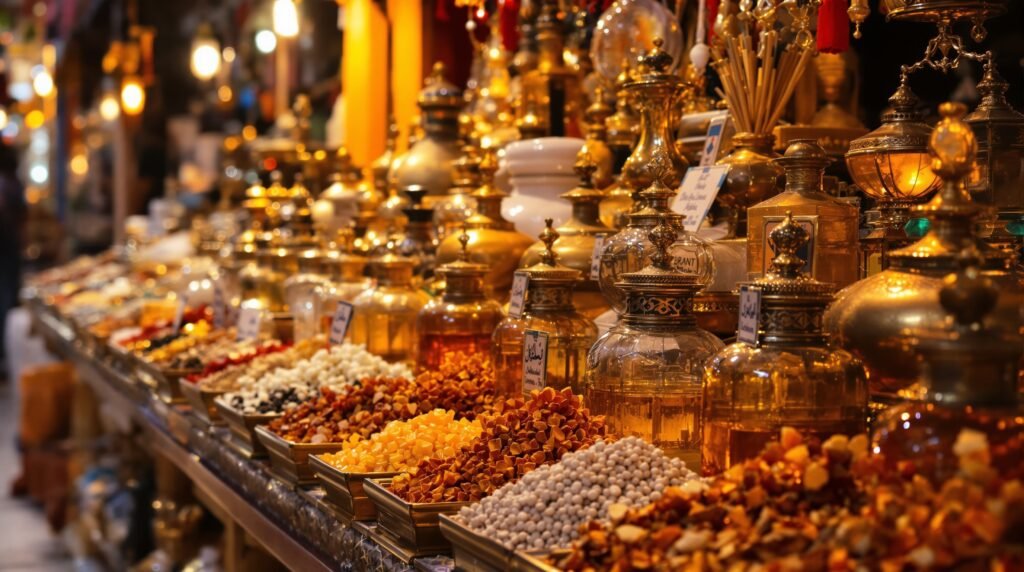
North Africa developed distinctive attar traditions that synthesized indigenous botanical knowledge with influences from Arab, Berber, and Mediterranean cultures. The region’s aromatic heritage, while less internationally recognized than Indian or Arabian traditions, represents authentic perfumery practices adapted to North African climate, flora, and cultural preferences.
Moroccan Perfumery Traditions
Morocco developed sophisticated perfumery centered on orange blossom (neroli), rose, and various aromatic herbs. Moroccan orange blossom, particularly from the Fez region, produces essential oil with distinctive aromatic character reflecting the region’s specific citrus varieties and processing methods. The traditional Moroccan distillation technique, using copper alembics similar to those used for rose water production, creates orange blossom attars that differ subtly from those produced elsewhere.
Moroccan rose cultivation, particularly in the Dades Valley, produces roses adapted to semi-arid mountain conditions. These roses, while related to Persian Damask roses, have developed distinctive characteristics through centuries of cultivation in Moroccan terroir. The resulting rose attar possesses unique aromatic nuances that reflect both botanical adaptation and traditional Moroccan processing techniques.
Egyptian Aromatic Heritage
Egypt’s perfumery traditions extend back to ancient times, creating one of the world’s longest continuous aromatic heritages. While modern Egyptian attar production differs significantly from ancient practices, certain traditions persist, particularly in the production of jasmine and lotus-based attars. Egyptian jasmine, grown in the Nile Delta, benefits from alluvial soils and irrigation patterns that create distinctive growing conditions.
Contemporary Egyptian perfumery also emphasizes complex blends that reference historical formulations. While these modern creations cannot claim direct continuity with ancient Egyptian perfumes, they represent attempts to maintain connection with Egypt’s aromatic heritage, demonstrating how historical consciousness shapes contemporary authentic production.
Tunisian and Algerian Specializations
Tunisia and Algeria developed expertise in herb-based attars utilizing Mediterranean aromatic plants including lavender, rosemary, and various indigenous herbs. These attars, less known internationally than floral or wood-based varieties, represent authentic regional traditions adapted to local flora. The emphasis on herbal aromatics reflects both botanical availability and cultural preferences for fresh, clean fragrances suited to Mediterranean climates.
East Asia
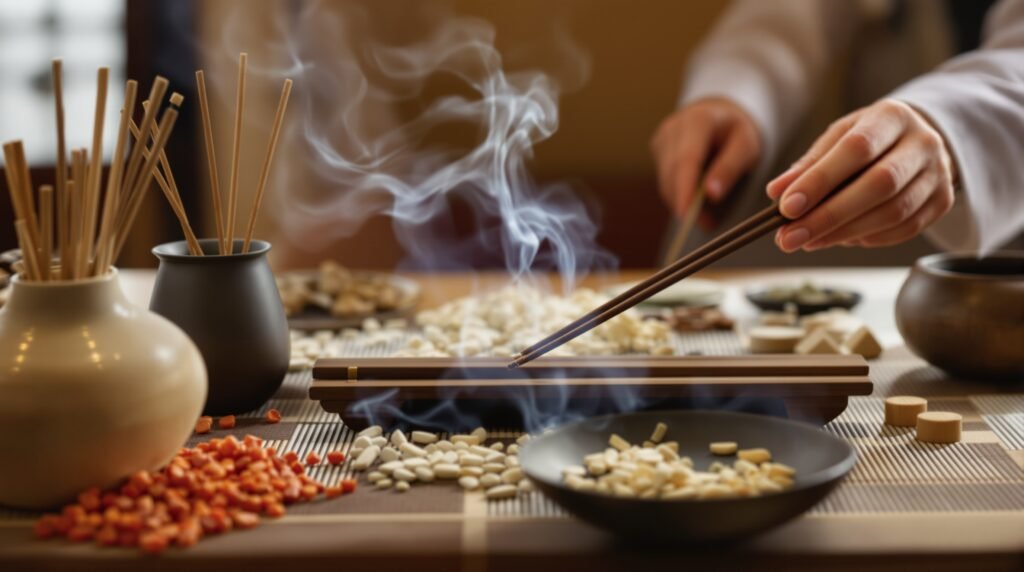
East Asian aromatic traditions, particularly in China and Japan, developed independently from Middle Eastern and Indian attar production, emphasizing incense and aromatic woods over distilled oils. However, these traditions represent authentic regional approaches to fragrance that influenced and were influenced by attar-producing cultures through trade and cultural exchange.
Chinese Aromatic Traditions
Chinese perfumery historically emphasized incense and aromatic woods, particularly agarwood, sandalwood, and camphor. While oil-based attars played a smaller role than in Indian or Middle Eastern traditions, Chinese perfumers developed sophisticated understanding of aromatic materials and their properties. The “Xiang Pu” (Treatise on Aromatics) and similar texts document extensive knowledge of aromatic classification, preparation methods, and applications.
Chinese aromatic philosophy emphasized harmony and balance, reflecting broader principles of traditional Chinese medicine and cosmology. Aromatics were classified according to yin-yang theory and the five elements, creating systematic approaches to scent that paralleled developments in other aspects of Chinese culture. This philosophical framework influenced aromatic practices throughout East Asia and, through trade routes, contributed to perfumery knowledge in other regions.
Japanese Kōdō and Aromatic Arts
Japan developed highly refined aromatic practices, particularly kōdō (the way of fragrance), which elevated incense appreciation to a formal art comparable to tea ceremony. While kōdō primarily involves incense rather than oils, it represents an authentic East Asian approach to fragrance that emphasizes contemplation, aesthetic refinement, and spiritual development. The principles underlying kōdō—attention to subtle variations, seasonal appropriateness, and integration with other arts—influenced broader East Asian aesthetic sensibilities.
Japanese perfumers also developed expertise in processing agarwood and other aromatic woods, creating regional styles distinct from Southeast Asian or Arabian approaches. The Japanese emphasis on subtlety and restraint produced aromatic preparations that differ aesthetically from the bold, long-lasting attars favored in Middle Eastern traditions, demonstrating how cultural values shape authentic regional practices even when working with similar materials.
Europe’s Historical Role in Attar Evolution
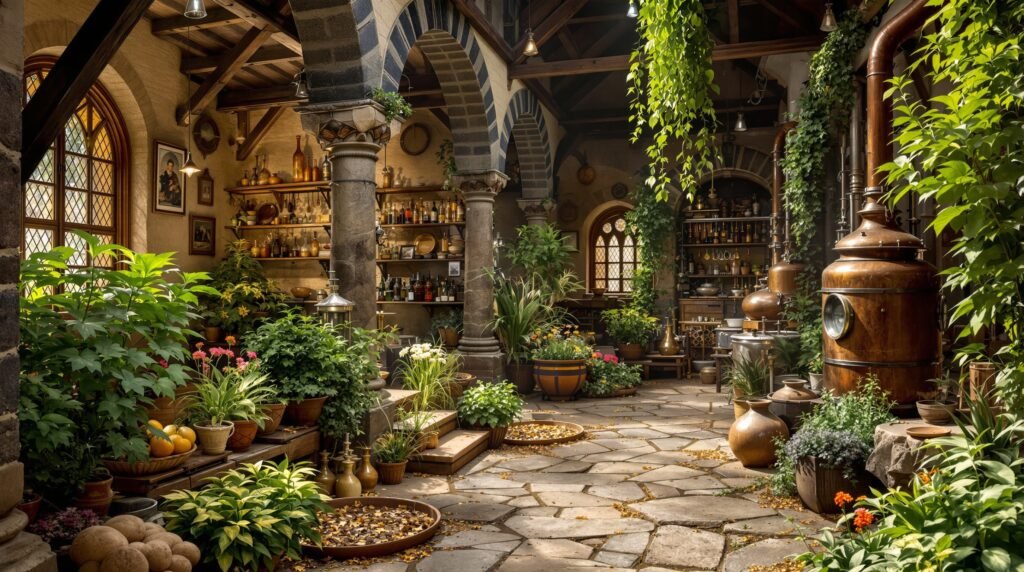
While Europe did not develop traditional attar production comparable to Asian and Middle Eastern regions, European contact with Eastern perfumery profoundly influenced both European and global fragrance traditions. The transmission of distillation knowledge from Islamic civilization to medieval Europe, the development of alcohol-based perfumery, and European colonial involvement in aromatic trade all shaped attar history significantly.
Knowledge Transmission and Translation
The translation of Arabic scientific texts into Latin during the 12th and 13th centuries introduced European scholars to advanced distillation techniques developed in Islamic civilization. Works by Avicenna, Al-Razi, and other Islamic scholars became foundational texts for European alchemy and early chemistry. This knowledge transfer enabled European development of distillation technology, though European perfumery diverged from traditional attar production by adopting alcohol as the primary solvent.
Mediterranean Aromatic Production
Southern European regions, particularly southern France and Italy, developed aromatic plant cultivation and essential oil production that, while technically distinct from traditional attar production, contributed to global perfumery knowledge. Grasse, France, became a major center for flower cultivation and essential oil extraction, developing techniques that influenced perfumery worldwide. While Grasse production emphasized alcohol-based perfumes rather than oil-based attars, the region’s botanical expertise and distillation innovations contributed to broader perfumery evolution.
Colonial Impact on Traditional Production
European colonialism significantly impacted traditional attar-producing regions, disrupting patronage systems while creating new commercial opportunities. British rule in India, French colonialism in North Africa, and Dutch control of Southeast Asian territories all affected local perfumery traditions. This colonial period created complex legacies: economic disruption threatened traditional practices, yet colonial trade networks also introduced traditional attars to new markets, contributing to their survival and global recognition.
Trade Routes and the Spread of Attar Culture
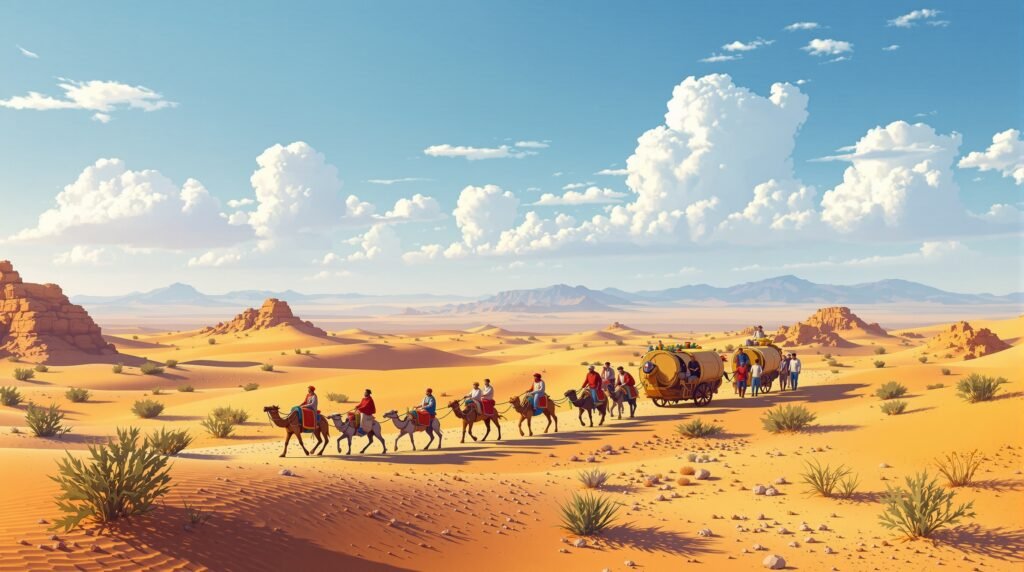
The global distribution of attar traditions cannot be understood without examining the trade networks that connected aromatic-producing regions. The Silk Road network, connecting China with the Mediterranean through Central Asia and the Middle East, served as a primary conduit for aromatic trade from ancient times through the medieval period. Merchants transported not only finished attars but also raw materials: Indian sandalwood to Persia, Arabian frankincense to China, Central Asian musk to India. This trade created economic interdependence that encouraged technical exchange and cultural cross-pollination.
The Silk Road and Overland Trade
The Silk Road network, connecting China with the Mediterranean through Central Asia and the Middle East, served as a primary conduit for aromatic trade from ancient times through the medieval period. Merchants transported not only finished attars but also raw materials: Indian sandalwood to Persia, Arabian frankincense to China, Central Asian musk to India. This trade created economic interdependence that encouraged technical exchange and cultural cross-pollination.
Perfumers traveled with merchant caravans, establishing workshops in foreign cities and training local artisans. This mobility spread innovations rapidly across vast distances. A distillation improvement developed in Persia might appear in Indian workshops within years, while Indian blending techniques influenced Central Asian perfumery. The Silk Road thus functioned not merely as a trade route but as a knowledge transmission network that shaped authentic regional traditions through continuous exchange.
Maritime Spice Routes
Maritime trade routes connecting Southeast Asia, India, Arabia, and East Africa created another major network for aromatic exchange. These sea routes enabled bulk transport of heavy materials like agarwood and sandalwood that would have been prohibitively expensive to move overland. Port cities—Calicut, Aden, Malacca, Guangzhou—became cosmopolitan centers where perfumers from different traditions interacted, exchanged knowledge, and created hybrid practices.
The monsoon wind patterns that governed maritime trade also influenced perfumery practices. Merchants timed voyages to seasonal winds, creating annual rhythms of aromatic material availability that shaped production schedules in importing regions. This integration of natural cycles, trade patterns, and production practices demonstrates how authentic attar traditions emerged from complex interactions between geography, commerce, and culture.
Cultural Exchange and Hybrid Traditions
Trade routes facilitated not only material exchange but also cultural transmission that created hybrid perfumery traditions. Arabian perfumers adopted Indian sandalwood as a base for oud blends. Persian rose cultivation techniques influenced Indian perfumery. Chinese aromatic philosophy affected Southeast Asian practices. These exchanges created regional traditions that, while authentic to their locations, reflect centuries of cross-cultural influence—demonstrating that authenticity does not require isolation but can emerge from creative synthesis of diverse influences.
Timeline – Global Evolution of Authentic Attars
3000 BCE
Indus Valley Civilization develops early distillation; aromatic oil production established in South Asia
2000 BCE
Ancient Egyptian perfumery reaches sophistication; Mesopotamian aromatic traditions flourish
1000 BCE
Frankincense trade from Arabia to Mediterranean and Asia established; aromatic trade routes develop
500 BCE – 500 CE
Silk Road facilitates aromatic exchange between Asia, Middle East, and Mediterranean; Persian rose cultivation begins
7th Century CE
Kannauj emerges as major attar production center; Islamic expansion spreads perfumery knowledge
9th–11th Century CE
Islamic Golden Age advances distillation science; Avicenna refines rose oil extraction; Persian perfumery flourishes
12th–14th Century CE
Mongol Empire facilitates East-West trade; aromatic knowledge spreads across Eurasia; Southeast Asian agarwood trade expands
15th–16th Century CE
Maritime spice routes connect Southeast Asia, India, Arabia, and East Africa; global aromatic trade intensifies
16th–18th Century CE
Mughal patronage elevates Indian attar production; Persian rose attar reaches peak sophistication; Arabian oud traditions develop
19th Century CE
European colonialism disrupts traditional production; synthetic perfumery emerges; traditional attars face industrial competition
Early 20th Century
Traditional attar production declines in some regions; Arabian Gulf states maintain strong attar culture
Mid-20th Century
Post-colonial period brings challenges and adaptations; some traditional centers struggle while others adapt to modern markets
Late 20th Century
Natural perfumery movement begins; renewed interest in traditional attars; conservation concerns for agarwood and sandalwood
21st Century
Global market for authentic attars expands; traditional producers adapt to contemporary commerce; preservation efforts increase; climate change threatens botanical resources
Threats to Authentic Attar Traditions
Authentic attar traditions face numerous contemporary threats that endanger both the ecological foundations of production and the cultural continuity of artisanal practices. Understanding these challenges is essential for developing effective preservation strategies and appreciating the fragility of these ancient traditions.
Environmental and Resource Depletion
Overexploitation of wild aromatic resources threatens several traditional attar materials. Wild agarwood populations have declined dramatically due to unsustainable harvesting, leading to CITES (Convention on International Trade in Endangered Species) listings for all Aquilaria species. Indian sandalwood faces similar pressures, with wild populations severely depleted and remaining trees often illegally harvested. These resource depletions threaten to fundamentally alter the terroir that defines authentic regional production.
Climate change threatens to fundamentally alter the terroir that defines authentic regional production. Changing temperature patterns, shifting rainfall, and increased extreme weather events affect flowering times, essential oil yields, and aromatic compound composition. Persian rose cultivation faces water scarcity as mountain snowpack declines. Indian monsoon pattern changes affect mitti attar production and numerous flower-based attars. These climate impacts threaten to fundamentally alter the terroir that defines authentic regional production.
Economic Pressures and Market Competition
Traditional attar producers face intense competition from synthetic fragrances and adulterated products marketed as authentic. The labor-intensive nature of traditional production creates cost structures that cannot compete with industrial manufacturing on price alone. This economic pressure forces many traditional producers to either compromise quality, cease production, or serve only luxury niche markets—all outcomes that threaten the survival of authentic traditions.
Urbanization and land development pressure traditional production centers. In Kannauj, real estate development encroaches on distillery areas, increasing land costs and creating conflicts between industrial and residential use. Similar pressures affect other traditional centers, threatening to displace production from the geographical locations that define authenticity.
Knowledge Transmission and Generational Challenges
Perhaps the most critical threat involves the breakdown of traditional knowledge transmission. Younger generations in attar-producing regions often pursue education and careers outside perfumery, attracted by less physically demanding work and more stable incomes. This generational shift threatens to break the apprenticeship chains through which tacit expertise has been transmitted for centuries.
The knowledge at risk includes not only technical skills but also aesthetic judgment, quality assessment abilities, and deep understanding of materials that can only be acquired through years of hands-on experience. Once this knowledge is lost, it cannot be recovered from written sources or scientific analysis—it represents irreplaceable cultural heritage that disappears with the last generation of traditional practitioners.
Preservation and Cultural Continuity
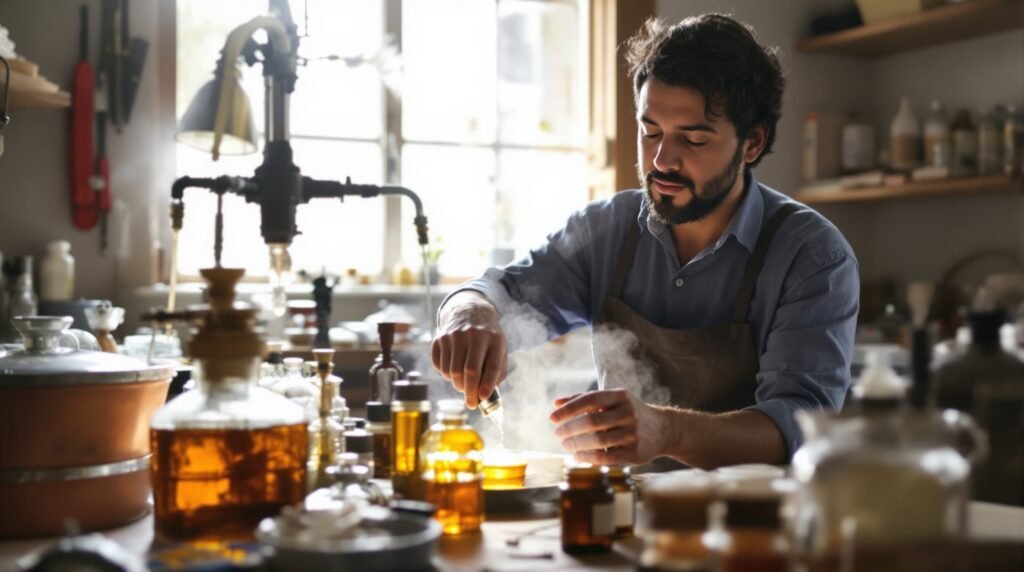
Despite significant threats, various efforts aim to preserve authentic attar traditions and ensure their continuation for future generations. These preservation initiatives range from grassroots artisan cooperatives to international conservation programs, each addressing different aspects of the complex challenge of maintaining living cultural traditions.
Sustainable Resource Management
Sustainable cultivation and harvesting practices offer potential solutions to resource depletion. Agarwood plantation cultivation, while producing material generally considered inferior to wild forest agarwood, provides sustainable supply that reduces pressure on wild populations. Research into artificial inoculation techniques aims to improve plantation agarwood quality, potentially creating sustainable sources of high-quality material.
Sandalwood cultivation programs in India and other regions attempt to restore depleted populations while providing sustainable supply for attar production. These programs face challenges including long maturation periods (sandalwood requires 15-20 years to produce harvestable wood) and the need to maintain genetic diversity to preserve aromatic quality. Success requires long-term commitment and careful management to balance commercial viability with conservation goals.
Cultural Heritage Recognition and Support
Recognition of traditional attar production as intangible cultural heritage provides frameworks for preservation support. UNESCO’s Intangible Cultural Heritage program and similar national initiatives offer potential mechanisms for documenting traditional knowledge, supporting artisan communities, and raising awareness of cultural significance. Such recognition can attract resources for preservation while increasing market value of authentic products.
Artisan cooperatives and producer associations help traditional perfumers access markets, share resources, and maintain quality standards. These organizations provide collective bargaining power, facilitate knowledge exchange, and create support networks that help individual producers survive economic pressures. Successful cooperatives demonstrate how traditional producers can adapt to contemporary markets while maintaining authentic practices.
Documentation and Education
Systematic documentation of traditional knowledge, while unable to fully capture tacit expertise, provides valuable records that can support preservation efforts. Video documentation of production processes, oral history projects recording master perfumers’ knowledge, and scientific analysis of traditional techniques all contribute to creating archives that future generations can reference.
Educational initiatives that teach traditional techniques to new generations offer hope for knowledge continuity. Some traditional production centers have established formal training programs that supplement traditional apprenticeship with structured education. These programs aim to make traditional perfumery more accessible to younger generations while maintaining authentic practices and standards.
Market Development and Consumer Education
Developing markets for authentic attars among consumers who appreciate and will pay for traditional quality provides economic foundation for preservation. This requires consumer education about authenticity, quality differences, and the cultural significance of traditional production. When consumers understand why authentic attars cost more than synthetic alternatives and value the cultural heritage they represent, they create market conditions that support traditional producers. For those interested in exploring authentic attars, our guide to different attar scent families provides an accessible introduction.
Conclusion – Why Geographical Authenticity Matters
Geographical authenticity in attar production matters because it represents the convergence of multiple factors that cannot be replicated through industrial processes or transplanted to arbitrary locations. Authentic attars emerge from specific combinations of terroir, botanical resources, cultural knowledge, historical continuity, and artisanal expertise—elements that develop over centuries and reflect deep integration between place, culture, and craft.
Understanding authentic attar traditions illuminates broader questions about cultural heritage, sustainable production, and the value of artisanal knowledge in industrial economies. The persistence of traditional attar production, despite economic pressures and technological alternatives, demonstrates that some human achievements cannot be reduced to chemical formulas or industrial processes. The tacit knowledge of master perfumers, the terroir of specific growing regions, and the cultural frameworks that support traditional production all contribute essential elements that define authenticity.
From a scientific perspective, authentic regional attars provide valuable case studies in how environmental factors influence botanical chemistry and how traditional knowledge systems develop sophisticated understanding through empirical observation. Modern analytical chemistry confirms many traditional claims about regional quality differences, validating centuries of artisanal expertise while revealing the chemical mechanisms underlying those differences.
Culturally, authentic attars represent living connections to historical traditions that span millennia. The rose attars of Persia, the sandalwood attars of India, the oud traditions of Arabia—each carries cultural significance that extends far beyond fragrance to encompass religious practice, social customs, artistic expression, and cultural identity. Preserving these traditions means maintaining not merely production techniques but entire cultural ecosystems that give those techniques meaning and context.
The threats facing authentic attar traditions—resource depletion, climate change, economic pressures, knowledge transmission challenges—reflect broader patterns affecting traditional crafts globally. How societies respond to these challenges will determine whether future generations can experience authentic attars or whether these traditions become historical curiosities, preserved only in museums and archives. The choices made today about supporting traditional producers, managing natural resources sustainably, and valuing cultural heritage will shape attar’s future.
Ultimately, geographical authenticity matters because it reminds us that some of humanity’s finest achievements emerge from patient cultivation of relationships between people, places, and materials over generations. Authentic attars represent not merely fragrances but embodiments of cultural wisdom, environmental adaptation, and artisanal excellence—achievements worth preserving for their own sake and for what they teach about human creativity, cultural continuity, and the irreplaceable value of place-based knowledge. For those seeking to understand the fundamental nature of these precious oils, our article on what attar is provides essential context for appreciating authentic traditions.
References and Further Reading
Botanical and Agricultural Studies:
Baser, K. Hüsnü Can, and Gerhard Buchbauer, eds. Handbook of Essential Oils: Science, Technology, and Applications. CRC Press, 2015.
Langenheim, Jean H. Plant Resins: Chemistry, Evolution, Ecology, and Ethnobotany. Timber Press, 2003.
Weiss, Ernest A. Essential Oil Crops. CAB International, 1997.
Regional Perfumery Traditions:
Pant, Gayatri Nath. Indian Perfume Industry. National Institute of Science Communication, 2002.
Sharma, Y.K. Kannauj: The Perfume Capital of India. Archaeological Survey of India, 1994.
Groom, Nigel. The Perfume Handbook. Chapman & Hall, 1992.
Agarwood and Oud Studies:
Naef, Reto. “The Volatile and Semi-Volatile Constituents of Agarwood.” Flavour and Fragrance Journal 26, no. 2 (2011): 73-87.
Persoon, Gerard A. “Agarwood: The Life of a Wounded Tree.” IIAS Newsletter 45 (2007): 24-25.
Ito, Masahiro, and Takashi Okudera. “Agarwood: A Review of Its Botany, Chemistry, and Uses.” Journal of Essential Oil Research 20, no. 4 (2008): 328-333.
Sandalwood Research:
Braun, Noel A., and Rainer W. Bussmann. “Sandalwood in the Pacific: Current State of Knowledge.” Economic Botany 68, no. 4 (2014): 445-459.
Sindhu, R.K., et al. “Sandalwood Oil: Phytochemistry, Pharmacology, and Therapeutics.” Phytotherapy Research 24, no. 1 (2010): 1139-1145.
Rose and Floral Attars:
Baydar, Hasan, and Nasim Baydar. “The Effects of Harvest Date, Fermentation Duration and Tween 20 Treatment on Essential Oil Content and Composition of Industrial Oil Rose.” Industrial Crops and Products 21, no. 2 (2005): 251-255.
Rusanov, Krasimir, et al. “Traditional Rosa damascena Flower Harvesting Practices Evaluated through GC/MS Metabolite Profiling.” Food Chemistry 213 (2016): 305-314.
Cultural and Historical Studies:
Classen, Constance, David Howes, and Anthony Synnott. Aroma: The Cultural History of Smell. Routledge, 1994.
Reinarz, Jonathan. Past Scents: Historical Perspectives on Smell. University of Illinois Press, 2014.
Aftel, Mandy. Essence and Alchemy: A Natural History of Perfume. North Point Press, 2001.
Conservation and Sustainability:
Soehartono, Tonny, and Alison C. Newton. “Conservation and Sustainable Use of Tropical Trees in the Genus Aquilaria.” Biological Conservation 96, no. 1 (2000): 83-94.
Subasinghe, Saman M.C.U.P. “Sandalwood Research: A Global Perspective.” Journal of Forestry Research 24, no. 1 (2013): 1-8.
Trade and Economic Studies:
Donkin, R.A. Dragon’s Brain Perfume: An Historical Geography of Camphor. Brill, 1999.
Miller, J. Innes. The Spice Trade of the Roman Empire, 29 B.C. to A.D. 641. Oxford University Press, 1969.
This article was prepared as an academic reference resource for TrueAttar.com. All geographical and botanical claims are based on scholarly sources, field research, and scientific literature. For corrections or additional references, please contact through our editorial channels.